
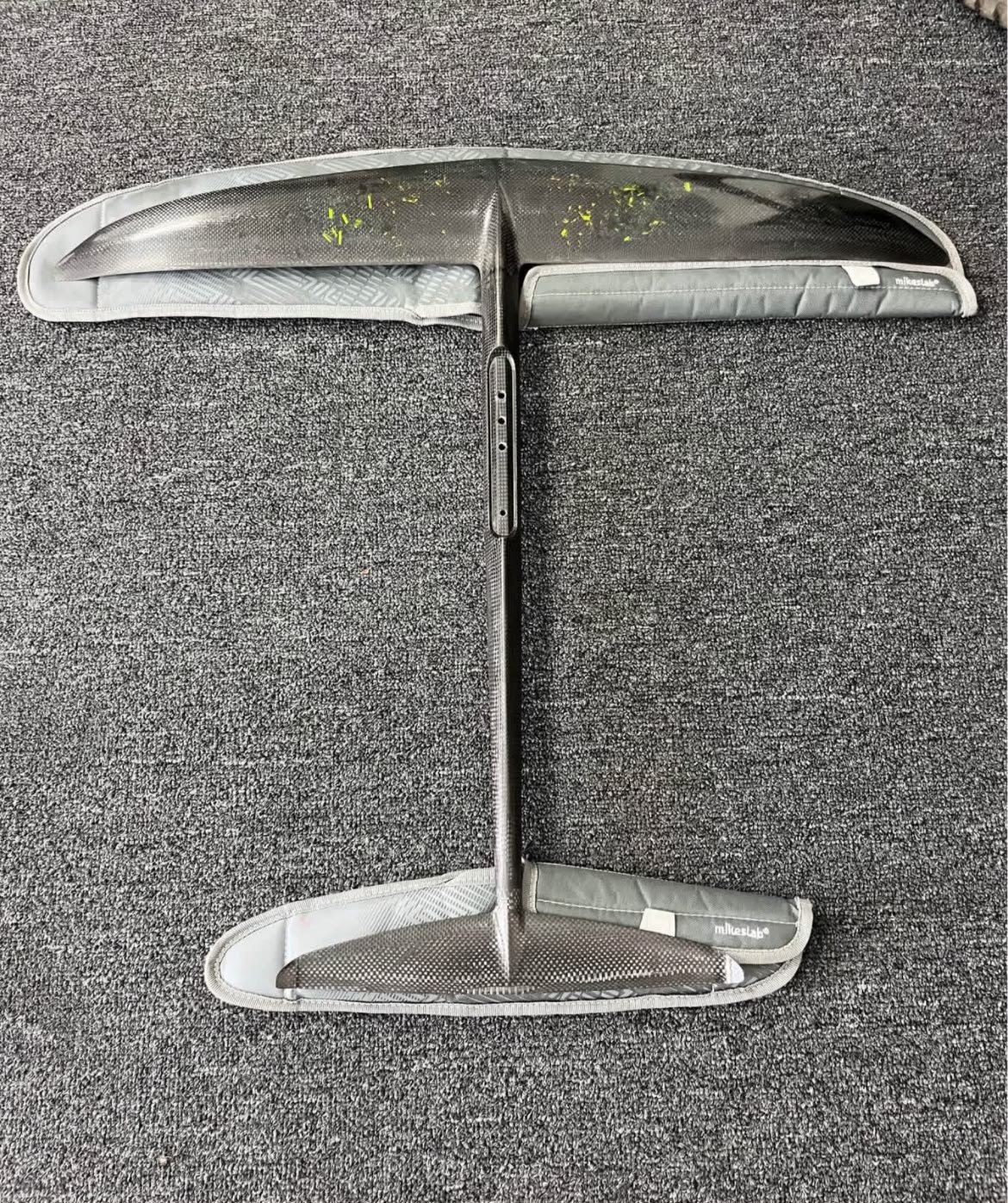
MikesLab 600 is recognised as a high-aspect performance front wing engineered for speed, stability, and precise control in wing foiling and related disciplines.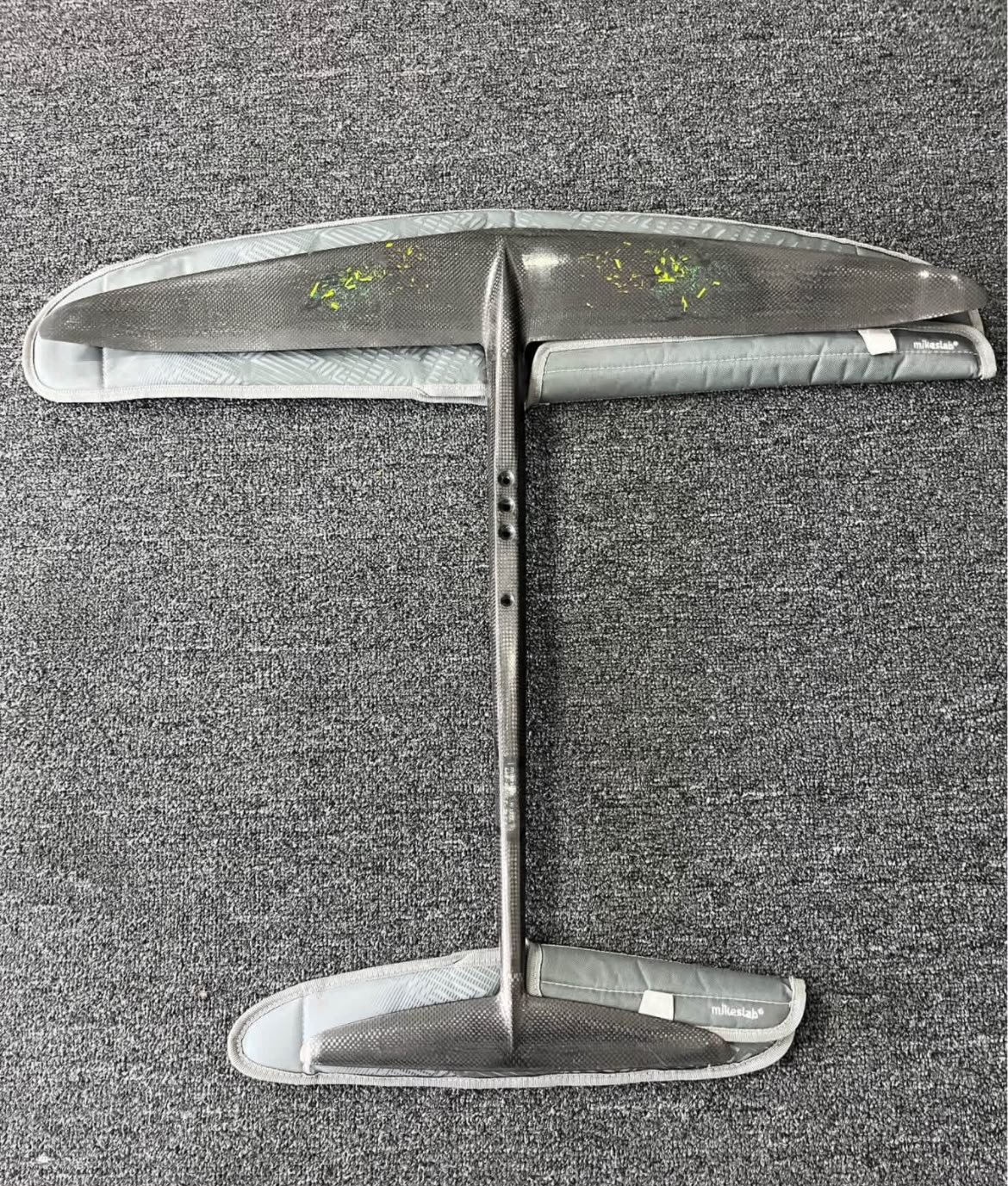
This 80 cm span, 600 cm² high-aspect wing is designed for advanced riders seeking maximum efficiency in medium to high wind conditions. Exceptional top-end speed, strong glide, reliable pumping characteristics, and sharp turning ability are combined in a compact, responsive package. The MikesLab 600 is frequently described by experienced riders as a favourite all-conditions racing and freeride foil within its size category
Riders of intermediate-to-advanced skill levels and suitable weight ranges are accommodated by the balanced performance envelope of the MikesLab 600. Whether the focus is competitive wing racing, high-wind freeride, or efficient upwind/downwind performance, this front wing delivers the refined handling that defines Mike’s Lab designs.
Design and Performance Characteristics of the MikesLab 600
The MikesLab 600 is developed with a high-aspect planform optimised for reduced drag and efficient lift. A surface area of 600 cm² paired with an 80 cm wingspan produces a wing that accelerates cleanly, maintains speed with minimal effort, and remains stable at high velocities.
Moreover, pumping efficiency is retained despite the relatively compact size, allowing riders to sustain flight through lulls or during transitions. Turning response is sharp and predictable, supporting both high-speed carved turns and tighter manoeuvres when required. Consequently, the wing rewards precise input while remaining composed under load.
Furthermore, the construction follows Mike’s Lab standards for stiffness, durability, and hydrodynamic efficiency. The result is clear feedback through the board and a connected, confidence-inspiring ride that advanced foilers appreciate in demanding conditions.
Highlighted Product Specifications and Listings
- Model: MikesLab 600 (ML600)
- Type: High-aspect front wing
- Span: 80 cm
- Surface area: 600 cm²
- Primary use: Wing foiling, racing, high-wind freeride
- Recommended rider level: Intermediate to advanced
- Typical wind range: Medium to high (often cited from approximately 15 mph / 24 km/h upward, depending on rider weight and setup)
- Key traits: High speed, excellent glide, strong stability, responsive turning, efficient pumping for size
- Rear wing options: Compatible with gated or V-tail stabilisers (depending on configuration)
- Mounting: Designed for integration with Mike’s Lab mast and fuselage systems (commonly Tuttle-style connections)
Note: Exact compatibility, available rear-wing pairings, and current production details should be confirmed with authorised Mike’s Lab dealers or the official product matrix.
Riding Feel and Ideal Conditions
Additionally, the MikesLab 600 excels once the rider is established on foil. Acceleration is progressive yet rapid, and the wing holds speed efficiently across reaches and downwind legs. Stability at high speed reduces the tendency for ventilation or loss of control during aggressive turns, particularly when paired with gated rear wings that limit yaw.
In addition, the relatively compact size keeps the wing agile for its lift characteristics, making it suitable for riders who want race-oriented performance without moving to the smallest, most demanding high-aspect wings. Heavier or lighter advanced riders within the recommended range can fine-tune feel through stabiliser choice, mast length, and board pairing.
Inclusive Progression and System Integration
Moreover, while the MikesLab 600 is oriented toward experienced foilers, its predictable behaviour and strong glide support continued skill development. Riders transitioning from larger, more forgiving wings often find the 600 an effective next step into higher-aspect, higher-speed performance.
The wing is intended to function as part of a complete Mike’s Lab system. Matching mast, fuselage, and stabiliser selections unlock the full design intent and ensure structural and hydrodynamic compatibility. Riders are encouraged to consult sizing guidance and experienced retailers when building or refining their setup.
Care, Longevity and Ownership Value
Furthermore, proper care preserves the performance of the MikesLab 600. Thorough rinsing after saltwater use, careful handling during transport, and secure storage protect the structure and surface finish. Avoiding impacts and maintaining correct assembly torque help ensure long-term reliability.
When maintained appropriately and used within its intended performance envelope, the wing is expected to deliver consistent speed, glide, and control across many seasons of demanding use.
Conversion-Focused Summary
In summary, the MikesLab 600 offers:
- High-aspect 80 cm / 600 cm² design optimised for speed and efficiency
- Excellent glide, stability, and turning response
- Strong pumping characteristics relative to size
- Suitable for intermediate-to-advanced wing foilers in medium-to-high wind
- Integration with the broader Mike’s Lab foil system
- Refined construction and feedback that reward precise riding
Whether the goal is competitive racing, high-wind freeride performance, or stepping up to a more efficient high-aspect platform, the MikesLab 600 delivers the focused capability that advanced riders seek. Confirm current availability, stabiliser options, and full system compatibility with an authorised Mike’s Lab dealer.
Add the MikesLab 600 to your quiver and experience the speed, stability, and precise control that define this high-aspect front wing.
MikesLab 600 – Part 2 expands on rider suitability, stabiliser options, range positioning, setup recommendations, and real-world performance insights.
Further advantages of the MikesLab 600 become clear once the wing is paired correctly and ridden in its intended conditions. The high-aspect 80 cm / 600 cm² design delivers a compelling mix of speed, glide, and control that advanced riders frequently describe as a personal favourite for wing foiling in medium to high wind. Precise feedback and stable high-speed behaviour allow riders to push harder with confidence.
Rider Weight, Skill Level and Wind Range Guidance
Moreover, the MikesLab 600 is generally recommended for intermediate-to-advanced riders. Typical rider weight feedback places it comfortably in the approximate 100–180 lb (45–82 kg) range, though individual board choice, mast length, and riding style influence the exact feel.
Additionally, the wing performs best once a solid foundation of foiling technique is established. Early lift is adequate for its size, yet the design prioritises efficiency and top-end performance over maximum low-end forgiveness. Wind ranges commonly cited start around 15 mph (24 km/h) and upward, depending on rider mass and overall setup. Consequently, the MikesLab 600 rewards riders who can generate and maintain board speed effectively.
Stabiliser Pairing: Gates versus V-Tail
Furthermore, rear-wing choice significantly shapes the character of the MikesLab 600. Configurations with rear gates are frequently praised for exceptional high-speed stability and resistance to yaw or blow-out during aggressive, high-banked turns. This setup inspires confidence when carving at speed or racing in stronger conditions.
In contrast, a V-tail option produces a looser, more surf-oriented feel. Greater ability to yaw the foil can suit riders who prefer a more playful or wave-style response. Both approaches remain compatible with the core strengths of the MikesLab 600—speed, glide, and responsive turning—allowing personal preference and intended use to guide the final selection.
Positioning Within the MikesLab Range
In addition, the MikesLab 600 occupies a versatile mid-to-high performance slot. Smaller wings in the range emphasise maximum speed and high-wind efficiency, while larger options prioritise earlier lift and broader low-end capability. The 600 cm² surface area and 80 cm span strike a practical balance: enough lift and pumping efficiency for sustained flight, combined with the reduced drag and agility expected from a high-aspect racing-oriented design.
Riders progressing from larger, more forgiving wings often find the MikesLab 600 an effective next step into higher-aspect performance without moving immediately to the smallest, most demanding sizes.
Setup Recommendations and Technique Notes
Moreover, optimal results with the MikesLab 600 are achieved when the complete system is considered. Mast length, fuselage choice, board volume, and footstrap placement all influence balance and control. A well-matched board with appropriate volume helps maintain the early speed needed to bring the wing onto foil cleanly.
Technique that emphasises smooth acceleration, efficient pumping, and precise rail engagement unlocks the wing’s full potential. Once flying, the MikesLab 600 rewards clean input with rapid acceleration, long glide, and composed high-speed behaviour. Riders report strong upwind ability and exciting downwind performance when the setup is dialled in.
Ownership Value and Long-Term Use
Furthermore, the refined construction and focused performance of the MikesLab 600 support lasting ownership satisfaction. When rinsed after saltwater use, protected during transport, and assembled with correct torque, the wing maintains its hydrodynamic efficiency and structural integrity across many seasons.
Integration with the broader Mike’s Lab ecosystem ensures access to compatible masts, fuselages, and stabilisers, allowing the setup to evolve with the rider’s goals. This system approach enhances both immediate performance and long-term versatility.
Conversion-Focused Summary In summary, Part 2 of the MikesLab 600 overview highlights:
- Clear guidance on rider weight, skill level, and effective wind range
- Distinct handling characteristics available through gated or V-tail stabilisers
- Balanced positioning between smaller speed foils and larger lift-oriented wings
- Setup and technique considerations that maximise speed, glide, and control
- Durable construction and system compatibility that support long-term use
Whether the MikesLab 600 is chosen for competitive wing racing, high-wind freeride, or as a step up into higher-aspect performance, it continues to deliver the speed, stability, and precise feedback that advanced riders value. Confirm current stabiliser options, system compatibility, and availability with an authorised Mike’s Lab dealer.
Add the MikesLab 600 to your quiver and continue refining high-performance wing foiling with a front wing engineered for efficiency, control, and pure speed.
MikesLab 600 – Part 3 completes the detailed overview by examining real-world racing and freeride use, care practices, travel considerations, progression pathways, and the lasting reasons advanced riders continue to choose this high-aspect front wing.
Further insight into the MikesLab 600 reveals how its combination of speed, glide, stability, and responsive turning translates into consistent performance across demanding sessions. Riders who have established solid foiling fundamentals discover that the wing rewards precise input with efficient acceleration, composed high-speed behaviour, and reliable control through turns and transitions.
Real-World Racing and Freeride Performance
Moreover, the MikesLab 600 is frequently selected for wingfoil racing and high-wind freeride. The high-aspect planform reduces drag while sustaining efficient lift, enabling strong upwind angles and rapid acceleration on reaches. Downwind legs benefit from the wing’s ability to hold speed with minimal effort, conserving energy over longer courses.
Additionally, high-speed stability—particularly when paired with gated stabilisers—supports aggressive carving and high-banked turns without excessive yaw or ventilation. This confidence at speed allows riders to maintain competitive lines and push harder in race conditions or energetic freeride sessions. Consequently, the MikesLab 600 serves both structured competition and free-flowing high-performance riding.
Care, Maintenance and Longevity
Furthermore, straightforward care practices help preserve the performance of the MikesLab 600. Thorough freshwater rinsing after every saltwater session removes corrosive residues. Careful inspection of the leading edge and mounting surfaces identifies minor damage before it affects hydrodynamics.
Correct assembly torque is essential: larger mounting screws are typically tightened to the manufacturer’s recommended values, while smaller rear screws require lower torque to avoid damage. Protective bags or padded cases during transport and storage reduce the risk of impacts. When these habits are followed, the wing maintains its efficiency, stiffness, and surface integrity across many seasons of use.
Travel and Transport Practicality
In addition, the relatively compact 80 cm span of the MikesLab 600 offers practical advantages for travel compared with larger high-aspect wings. The wing packs more easily into foil bags or travel cases while still delivering substantial performance on the water. Secure padding around the tips and mounting area protects the structure during transit.
Riders who fly or drive to different venues appreciate the balance between performance capability and manageable packed size. Matching the front wing with a compatible Mike’s Lab mast and fuselage further simplifies multi-destination setups.
Progression Pathways and Range Context
Moreover, the MikesLab 600 functions effectively as both a destination wing and a stepping stone within a high-performance quiver. Riders moving up from larger, more forgiving foils often find the 600 an ideal introduction to higher-aspect efficiency and speed. Those already comfortable with smaller wings may keep the 600 as a versatile option for slightly lighter conditions or longer sessions.
Nearby sizes in the Mike’s Lab range offer clear alternatives: smaller wings prioritise maximum top speed and high-wind control, while larger options extend low-end accessibility. The MikesLab 600 occupies a practical middle ground that many advanced riders return to repeatedly.
Final Ownership Perspective and Conversion Focus
Furthermore, Part 3 of the overview reinforces the core strengths of the platform:
- Proven high-speed stability and efficiency for racing and freeride
- Reliable glide and pumping characteristics relative to size
- Straightforward care practices that protect long-term performance
- Compact enough dimensions for practical travel
- Clear progression value within a high-aspect quiver
- System compatibility that supports ongoing refinement
Whether the MikesLab 600 is chosen as a primary race wing, a high-wind freeride tool, or a versatile high-aspect option, it continues to deliver the speed, control, and refined feedback that advanced wing foilers value. Confirm current stabiliser configurations, system compatibility, and availability with an authorised Mike’s Lab dealer.
Add the MikesLab 600 to your setup today and continue refining high-performance wing foiling with a front wing engineered for efficiency, stability, and pure speed on the water.
Understanding the Complete Foil Ecosystem
Modern foil sports have expanded rapidly, giving riders multiple ways to experience the unique sensation of flying above the water. Whether the focus is kite foil, wing foil, classic hydrofoil setups, or newer formats such as efoil and electric foil, the core components and principles remain closely related. A clear understanding of terminology and equipment choices helps riders of every level select the right gear for their goals.
Core Disciplines and Riding Styles
Foilboarding encompasses several overlapping activities. Kite foiling (also called foil kiteboarding or foil kitesurfing) pairs a foil kite or hydrofoil kite with a kite hydrofoil setup. Wingfoiling (or wing foil) uses a handheld foil wing for propulsion. Foil surfing focuses on wave riding with a hydrofoil board, while pure foil riding during a dedicated foil session can take place in flat water, swell, or downwind conditions. Each style benefits from a properly matched foil setup.
Anatomy of a Complete Foil Setup
A typical foil setup consists of several key parts. The foil mast connects the board to the underwater wing system and determines flying height. The foil fuselage links the foil front wing to the foil rear wing (commonly called the foil stabilizer).
Material choice influences performance and weight. A carbon foil offers high stiffness and low weight, while an aluminium foil provides durability and value, especially for riders starting out. Selecting the correct foil size and foil aspect ratio is critical. A high aspect foil emphasises glide and efficiency, whereas a low aspect foil prioritises lift, stability, and tighter turning.
Matching Equipment to Rider Level and Conditions
Choosing the right equipment depends on experience and typical conditions. A foil for beginners usually features more surface area and a more forgiving low aspect foil design. An intermediate foil balances accessibility with improved efficiency, while an advanced foil often uses a high aspect foil for maximum glide and speed.
Foil wind range also guides selection. A light wind foil with larger surface area helps riders get flying earlier, while a strong wind foil with reduced area maintains control when the wind increases. Board choice follows similar logic: foil board size and foil board volume should match rider weight, style, and conditions. Many modern boards accept foil straps or foil footstraps for secure foot placement, and a foil leash adds an important safety connection.
Practical Accessories and Travel Considerations
Supporting accessories complete the experience. A reliable foil pump inflates kites or wings quickly, while a protective foil bag keeps the foil front wing, mast, and fuselage safe during transport. Riders who travel frequently often look for a travel foil or compact foil system that packs efficiently without sacrificing too much performance.
Whether the chosen craft is a dedicated hydrofoil board, a versatile foil board, or a specialised platform for kite foil or wingfoiling, understanding these interconnected elements—from foil mast and foil stabilizer to foil size and foil aspect ratio—allows every rider to build a setup that matches their skill level, local conditions, and personal riding goals.
Be the first to review “MikesLab 600”
Related products
Second Hand
Second Hand
Second Hand
Second Hand
Second Hand
Second Hand
Second Hand
Second Hand
Reviews
There are no reviews yet.