
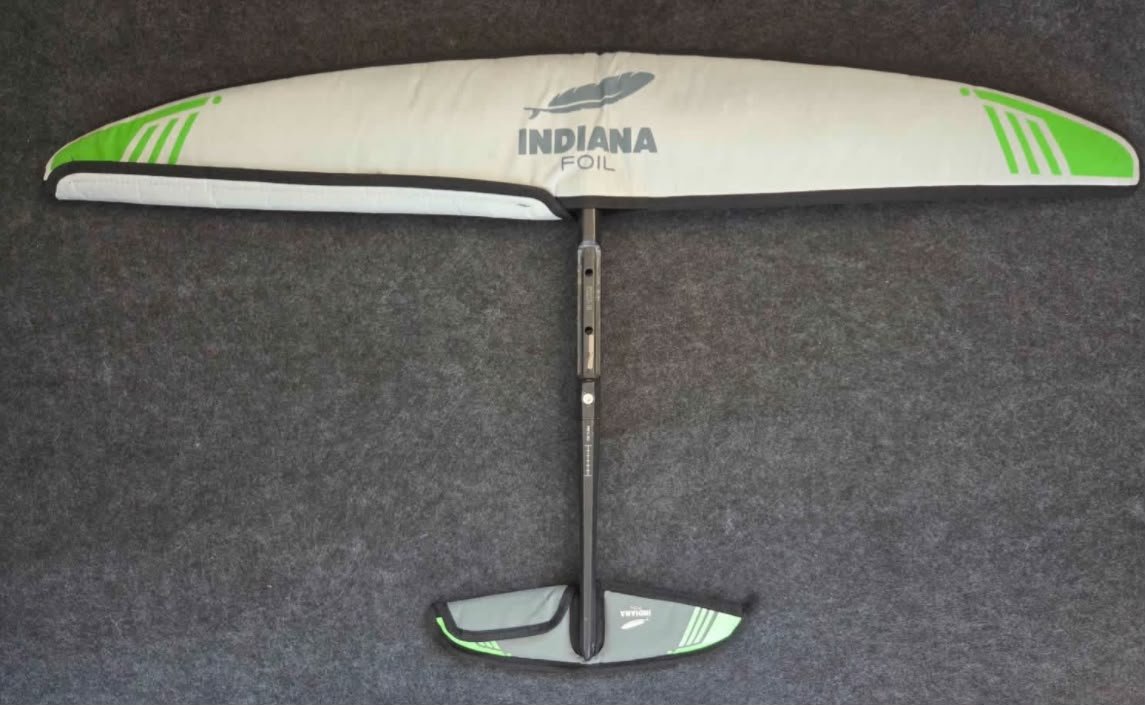
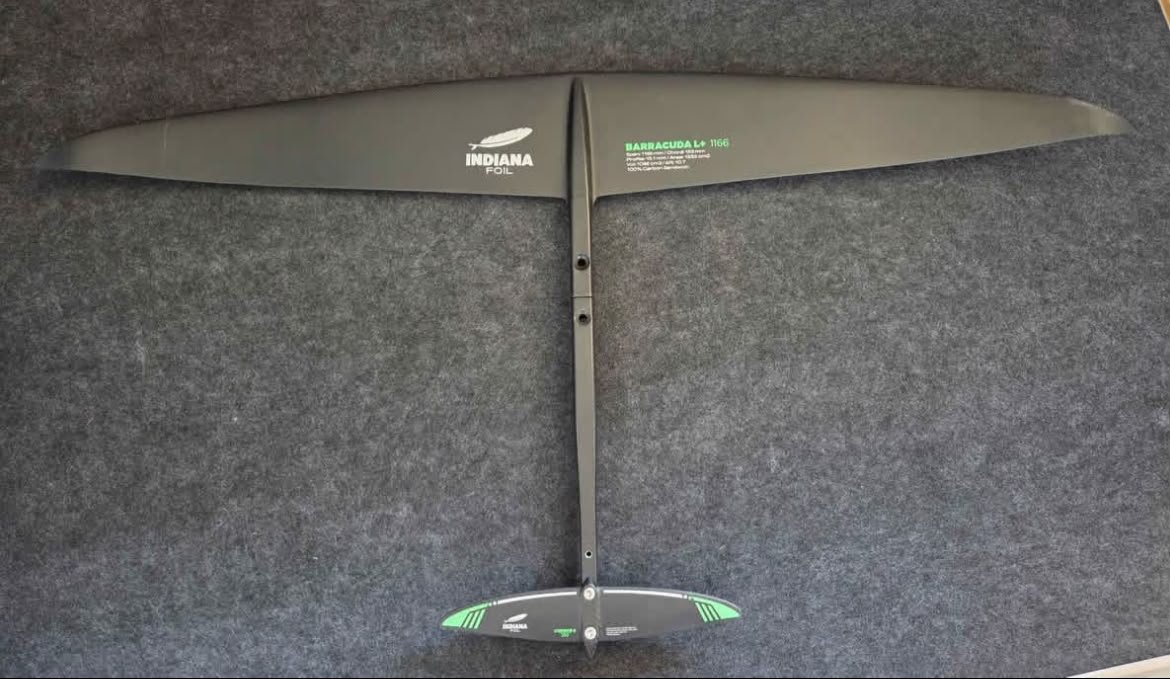
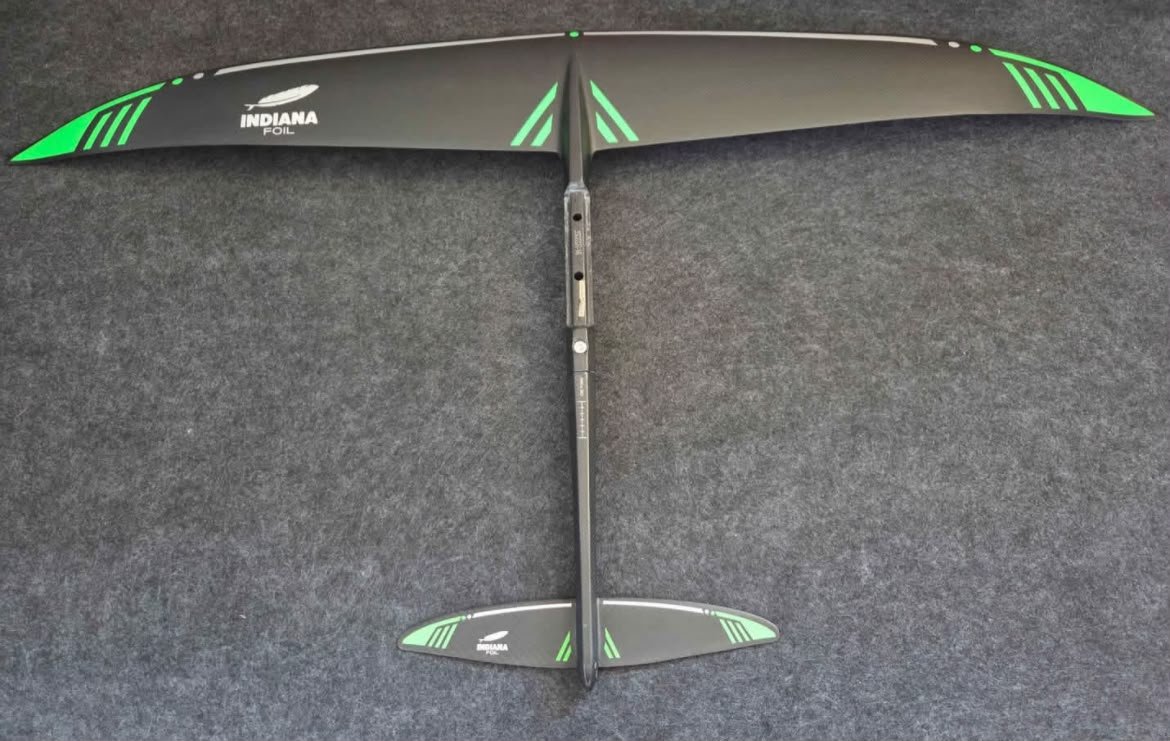
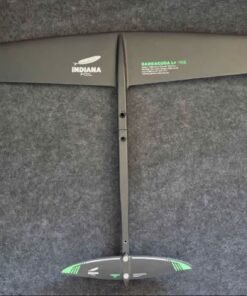
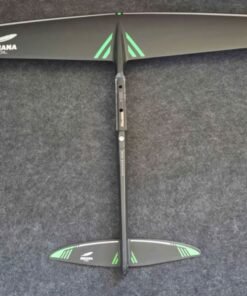
Wing foil indiana
€400.00
Wing foil Indiana boards and foils from Indiana Paddle & Surf offer compact, stable designs with durable carbon or inflatable construction. Ideal for beginners to advanced riders, they deliver early takeoff, balanced handling, and versatile performance across freeride, light-wind, and progressive wing foiling.
Wing foil Indiana equipment from Indiana Paddle & Surf is recognised for delivering accessible performance, durable construction, and versatile designs across wing foiling disciplines
Indiana’s wing foil boards and foil systems are developed to support riders from first flights through to advanced freeride, freestyle, and light-wind exploration. Compact outlines, efficient volume distribution, and robust multi-layer carbon or high-quality inflatable constructions are combined so that early takeoff, stability, and progressive handling are achieved. The Wing-foil Indiana range covers hardboards in multiple volumes, inflatable options for travel, and coordinated foil components spanning mid-aspect to extra-high-aspect designs.
Riders of every skill level, body type, and local condition are accommodated by the thoughtful sizing and shape philosophy behind Wing-foil Indiana products. Whether the goal is learning to fly, progressing in flat water, or exploring waves and downwind runs, the range provides reliable platforms that grow with the rider.
Design Philosophy Behind Wing-foil Indiana Boards
The Wing-foil Indiana board collection emphasises compact outlines that reduce swing weight while preserving stability at rest and during early planing. Flat or efficiently rockered bottoms help the boards reach takeoff speed quickly. Volume is distributed to support balanced stance and easy foot movement, while hard rails and refined tails aid clean release onto the foil.
Moreover, construction prioritises stiffness and durability. Full sandwich EPS/PVC carbon vacuumed epoxy builds with reinforced rails and foil boxes deliver a responsive, ding-resistant platform. Inflatable models use woven double-layer drop-stitch construction with fiberglass reinforcement for stiffness and travel convenience. Consequently, both hard and inflatable Wing-foil Indiana boards feel direct and confidence-inspiring on the water.
Furthermore, many models include practical features such as nose handles for shore-break management, M6 footstrap inserts for V-strap setups, and comfortable deck pads that allow easy stance adjustment in flight.
Highlighted Product Range and Specifications
- Category: Wing foil Indiana boards and foil systems
- Board types: Compact carbon hardboards, inflatable wing foil boards, hybrid/downwind crossover shapes
- Typical volume range: Approximately 55 L to 165 L+ (model dependent)
- Construction (hardboards): Multi-layer carbon/PVC sandwich, vacuumed epoxy, reinforced rails and boxes
- Construction (inflatables): Woven double-layer drop-stitch with fiberglass stringers and reinforced foil boxes
- Key shape traits: Compact outline, efficient rocker, balanced volume distribution, hard rails
- Features: Nose handles, footstrap inserts, quality deck pads, board bags on many models
- Foil families: M-AR (mid-aspect allround), H-AR, X-AR (extra high aspect), pump-oriented designs
- Intended use: Beginner progression, freeride, light-wind winging, freestyle entry, hybrid SUP/wing applications
Note: Exact sizes, volumes, and current foil component specifications should be confirmed with authorised Indiana dealers, as the range is regularly refined.
Performance Advantages Across Skill Levels
Additionally, Wing-foil Indiana boards are frequently praised for stability that exceeds their stated volume, helping new riders feel secure while learning to manage the wing and foil. Early planing and clean release reduce the physical effort required to get flying. Once on foil, the compact dimensions and balanced platforms deliver connected feedback and progressive handling that support skill development.
In addition, more experienced riders appreciate the light weight, stiffness, and efficiency for freeride, light-wind sessions, and crossover use. Certain shapes blend wing and downwind SUP characteristics, expanding the range of conditions in which a single board remains effective.
Inclusive Design and Versatile Applications
Moreover, the broad volume range and thoughtful shaping of Wing-foil Indiana products support inclusive participation. Larger volumes assist heavier riders or complete beginners, while more compact sizes suit lighter or advanced riders seeking reduced swing weight and tighter turning. Inflatable options further increase accessibility for travellers and those prioritising convenience without fully sacrificing performance.
The coordinated foil range—from mid-aspect allround wings to higher-aspect designs—allows riders to match front-wing characteristics to their board, weight, and local wind or swell conditions. This system approach helps create balanced setups suitable for progression and long-term enjoyment.
Ownership, Care and Long-Term Value
Furthermore, durable construction and practical features contribute to lasting ownership satisfaction. Hardboards resist dings through reinforced builds, while inflatables withstand travel and repeated inflation cycles when properly cared for. Rinsing after saltwater use, careful storage, and correct foil assembly practices help maintain performance. Many boards are supplied with quality bags that protect the equipment between sessions and during transport.
Conversion-Focused Summary
In summary, Wing-foil Indiana equipment offers:
- Compact, stable board designs that support early takeoff and progressive riding
- Durable carbon and high-quality inflatable constructions
- Broad volume and size options for inclusive fit across rider weights and skill levels
- Coordinated foil components spanning mid- to extra-high-aspect performance
- Practical features that enhance usability on the beach and on the water
- Versatile platforms suitable for learning, freeride, light wind, and hybrid use
Whether the first wing foil setup is being chosen or an existing quiver is being refined, Wing-foil Indiana products deliver accessible performance backed by thoughtful Swiss design. Confirm current board volumes, foil pairings, and availability with an authorised Indiana Paddle & Surf dealer.
Explore the Wing-foil Indiana range today and experience stable, progressive foiling that grows with every session.
expands on board selection guidance, foil family characteristics, practical use cases, and setup considerations that help riders get the most from the range.
Further advantages of Wing-foil Indiana equipment become apparent once the correct board volume and foil combination are matched to the rider and local conditions. Compact shapes, efficient volume distribution, and coordinated foil options work together to deliver early takeoff, balanced flight, and progressive handling that support continuous improvement.
Choosing the Right Wing-foil Indiana Board Volume
Moreover, board volume remains one of the most important starting points. Larger volumes within the Wing-foil Indiana range provide greater stability at rest and easier planing, making them well suited to beginners, heavier riders, or light-wind sessions. Mid-range volumes offer a versatile balance of accessibility and reduced swing weight for progressing freeride use. More compact sizes prioritise agility and responsiveness for advanced riders who can generate speed efficiently.
Additionally, the compact outlines typical of many Wing-foil Indiana boards mean that stated volumes often feel more stable than expected. This characteristic helps riders feel confident while learning wing control and foil management, yet still allows the board to feel lively once flying.
Understanding Indiana Foil Families
Furthermore, the foil component range is organised to match different riding goals. Mid-aspect (M-AR) designs deliver accessible lift and forgiving behaviour suitable for all-round wing foiling from beginner through intermediate levels. Higher-aspect and extra-high-aspect options emphasise efficiency, glide, and speed for pump foiling, downwind runs, or more advanced freeride performance.
Pump-oriented wings prioritise low-speed lift and sustained flight with minimal input, while speed-focused designs reduce drag for higher average velocities. Selecting the appropriate front wing in conjunction with a Wing-foil Indiana board creates a balanced system that matches the rider’s current ability and intended use.
Practical Use Cases Across Conditions
In addition, Wing-foil Indiana boards perform effectively across a variety of scenarios. Flat-water freeride and learning sessions benefit from the stable platforms and early planing characteristics. Light-wind winging is supported by efficient shapes that reach takeoff speed with modest power. Certain hybrid and mid-length designs expand versatility into downwind SUP foiling or crossover sessions, reducing the need for multiple specialised boards.
Wave-oriented or freewave shapes within the broader range allow progressive riders to explore small swell while retaining the core stability and construction quality associated with the brand. Consequently, many riders find that a well-chosen Wing-foil Indiana board covers a wide percentage of their local conditions.
Setup Tips for Balanced Performance
Moreover, optimal results are achieved when the complete system is considered. Footstrap placement (where used) should support a balanced stance relative to the foil. Mast length influences both stability and turning radius—longer masts generally increase clearance and high-speed composure, while shorter masts can feel more playful.
Matching front-wing surface area and aspect ratio to rider weight, board volume, and typical wind strength further refines the experience. Riders are encouraged to consult sizing guidance and experienced retailers when assembling or upgrading a Wing-foil Indiana setup so that each component works in harmony.
Ownership Experience and Progression Value
Furthermore, the durable constructions and thoughtful features of Wing-foil Indiana products support long-term ownership. Reinforced hardboards resist the impacts common in learning environments, while quality inflatable models withstand repeated travel and inflation cycles. Practical details such as nose handles, comfortable deck pads, and protective bags enhance day-to-day usability.
As skills develop, the same board and foil system can often continue to perform effectively, or individual components can be upgraded within the Indiana ecosystem. This progression-friendly approach helps riders invest with confidence.
Conversion-Focused Summary
In summary, Part 2 of the Wing-foil Indiana overview highlights:
- Clear volume selection guidance for different rider weights and skill levels
- Distinct foil family characteristics that match all-round, pump, and high-aspect goals
- Versatile performance across flat water, light wind, and hybrid applications
- Practical setup considerations that maximise balance and efficiency
- Durable construction and features that support lasting enjoyment and progression
Whether the first complete wing foil package is being assembled or an existing setup is being refined, Wing-foil Indiana equipment continues to offer accessible performance backed by consistent design. Confirm current board volumes, foil pairings, and availability with an authorised Indiana Paddle & Surf dealer.
Explore the Wing-foil Indiana range and build a setup that supports confident progression on every
Wing-foil Indiana – completes the detailed overview by focusing on skill progression, care practices, travel practicality, and the lasting value that riders experience with the range.
Further insight into Wing-foil Indiana equipment reveals how stable platforms, efficient shapes, and coordinated foil options support continuous improvement on the water. Riders of every background discover that thoughtful design choices translate into more successful sessions, faster learning curves, and greater long-term enjoyment.
Supporting Skill Progression from First Flights Onward
Moreover, the accessible stability and early planing characteristics of many Wing-foil Indiana boards help new riders build confidence quickly. Larger volumes and balanced outlines reduce the difficulty of standing, managing the wing, and achieving first flights. Once airborne, the direct feedback and progressive handling encourage riders to refine stance, pumping technique, and basic turns.
Additionally, as skills advance, the same platforms often continue to perform effectively for freeride and light-wind exploration. More compact sizes and higher-aspect foil pairings within the range allow riders to step up performance without immediately replacing the entire setup. Consequently, Wing-foil Indiana equipment supports a clear and rewarding progression pathway.
Care and Maintenance for Lasting Performance
Furthermore, straightforward care practices help preserve the performance and appearance of Wing-foil Indiana boards and foils. Hardboards benefit from thorough freshwater rinsing after saltwater use, careful avoidance of hard impacts on rails and foil boxes, and storage away from excessive heat or pressure.
Inflatable models require proper inflation pressures, protection from sharp objects, and complete drying before long-term storage. Foil components should be rinsed, inspected for dings or loose hardware, and assembled with correct torque. When these habits are followed, both hard and inflatable Wing-foil Indiana products maintain their stiffness, responsiveness, and reliability across many seasons.
Travel and Convenience Advantages
In addition, the range offers practical solutions for riders who travel or value convenience. Compact hardboard outlines pack more easily than traditional longer shapes, while dedicated board bags provide protection during transport. Inflatable Wing-foil Indiana models further simplify travel by deflating into manageable packages that fit airline baggage or car boots with ease.
Reinforced constructions on both hard and soft boards withstand the demands of repeated packing, beach use, and varied conditions. This combination of performance and portability makes the range suitable for local sessions and destination trips alike.
Inclusive Participation and Long-Term Ownership Value
Moreover, the broad volume options, stable designs, and coordinated foil families of Wing-foil Indiana products support inclusive participation. Beginners, progressing riders, heavier or lighter athletes, and those exploring hybrid wing/SUP applications all find suitable entry points and upgrade paths.
Durable materials and thoughtful features—such as nose handles, quality deck pads, and footstrap inserts—enhance day-to-day usability and contribute to lasting ownership satisfaction. Riders frequently report that well-chosen Indiana setups remain relevant and enjoyable long after the initial learning phase.
Final Ownership Perspective and Conversion Focus
Furthermore, Part 3 of the overview reinforces the core strengths of the platform:
- Stable, progressive designs that support learning and continued development
- Durable hardboard and inflatable constructions suited to real-world use
- Practical travel-friendly options that maintain performance
- Inclusive sizing and foil pairings for a wide range of riders
- Clear care practices that protect long-term value
- Versatile platforms that adapt as skills and ambitions grow
Whether the first wing foil package is being selected or an existing quiver is being refined, Wing-foil Indiana equipment continues to deliver accessible performance backed by consistent Swiss design. Confirm current board volumes, foil combinations, and availability with an authorised Indiana Paddle & Surf dealer.
Explore the Wing-foil Indiana range today and build a setup that supports confident, enjoyable progression on every session.
Modern foil sports have expanded rapidly, giving riders multiple ways to experience the unique sensation of flying above the water. Whether the focus is kite foil, wing foil, classic hydrofoil setups, or newer formats such as efoil and electric foil, the core components and principles remain closely related. A clear understanding of terminology and equipment choices helps riders of every level select the right gear for their goals.
Core Disciplines and Riding Styles
Foilboarding encompasses several overlapping activities. Kite foiling (also called foil kiteboarding or foil kitesurfing) pairs a foil kite or hydrofoil kite with a kite hydrofoil setup. Wingfoiling (or wing foil) uses a handheld foil wing for propulsion. Foil surfing focuses on wave riding with a hydrofoil board, while pure foil riding during a dedicated foil session can take place in flat water, swell, or downwind conditions. Each style benefits from a properly matched foil setup.
Anatomy of a Complete Foil Setup
A typical foil setup consists of several key parts. The foil mast connects the board to the underwater wing system and determines flying height. The foil fuselage links the foil front wing to the foil rear wing (commonly called the foil stabilizer).
Material choice influences performance and weight. A carbon foil offers high stiffness and low weight, while an aluminium foil provides durability and value, especially for riders starting out. Selecting the correct foil size and foil aspect ratio is critical. A high aspect foil emphasises glide and efficiency, whereas a low aspect foil prioritises lift, stability, and tighter turning.
Matching Equipment to Rider Level and Conditions
Choosing the right equipment depends on experience and typical conditions. A foil for beginners usually features more surface area and a more forgiving low aspect foil design. An intermediate foil balances accessibility with improved efficiency, while an advanced foil often uses a high aspect foil for maximum glide and speed.
Foil wind range also guides selection. A light wind foil with larger surface area helps riders get flying earlier, while a strong wind foil with reduced area maintains control when the wind increases. Board choice follows similar logic: foil board size and foil board volume should match rider weight, style, and conditions. Many modern boards accept foil straps or foil footstraps for secure foot placement, and a foil leash adds an important safety connection.
Practical Accessories and Travel Considerations
Supporting accessories complete the experience. A reliable foil pump inflates kites or wings quickly, while a protective foil bag keeps the foil front wing, mast, and fuselage safe during transport. Riders who travel frequently often look for a travel foil or compact foil system that packs efficiently without sacrificing too much performance.
Whether the chosen craft is a dedicated hydrofoil board, a versatile foil board, or a specialised platform for kite foil or wingfoiling, understanding these interconnected elements—from foil mast and foil stabilizer to foil size and foil aspect ratio—allows every rider to build a setup that matches their skill level, local conditions, and personal riding goals.
Be the first to review “Wing foil indiana”
Related products
Second Hand
Second Hand
Second Hand
Second Hand
Second Hand
Second Hand
Second Hand
Second Hand
Reviews
There are no reviews yet.