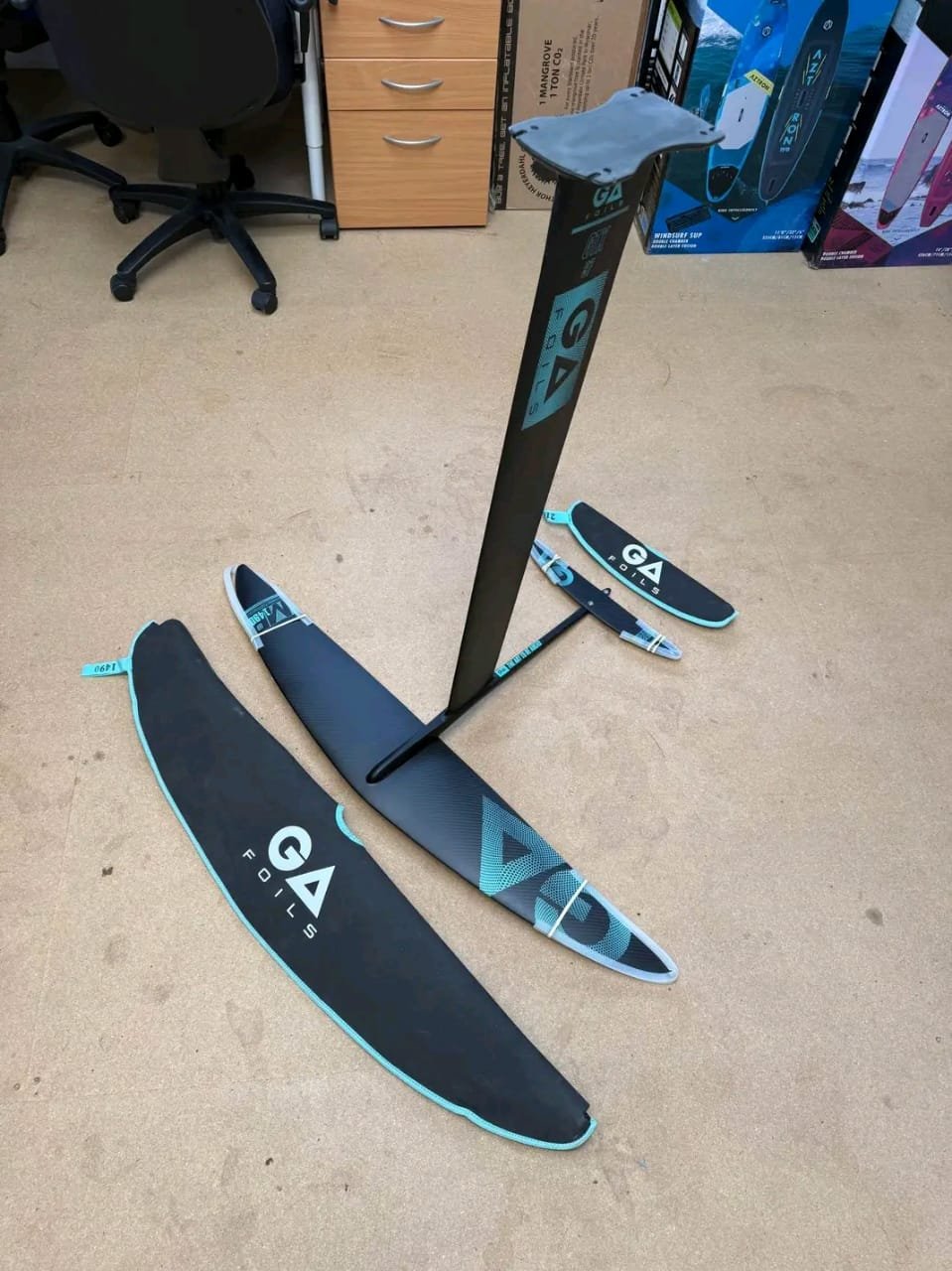
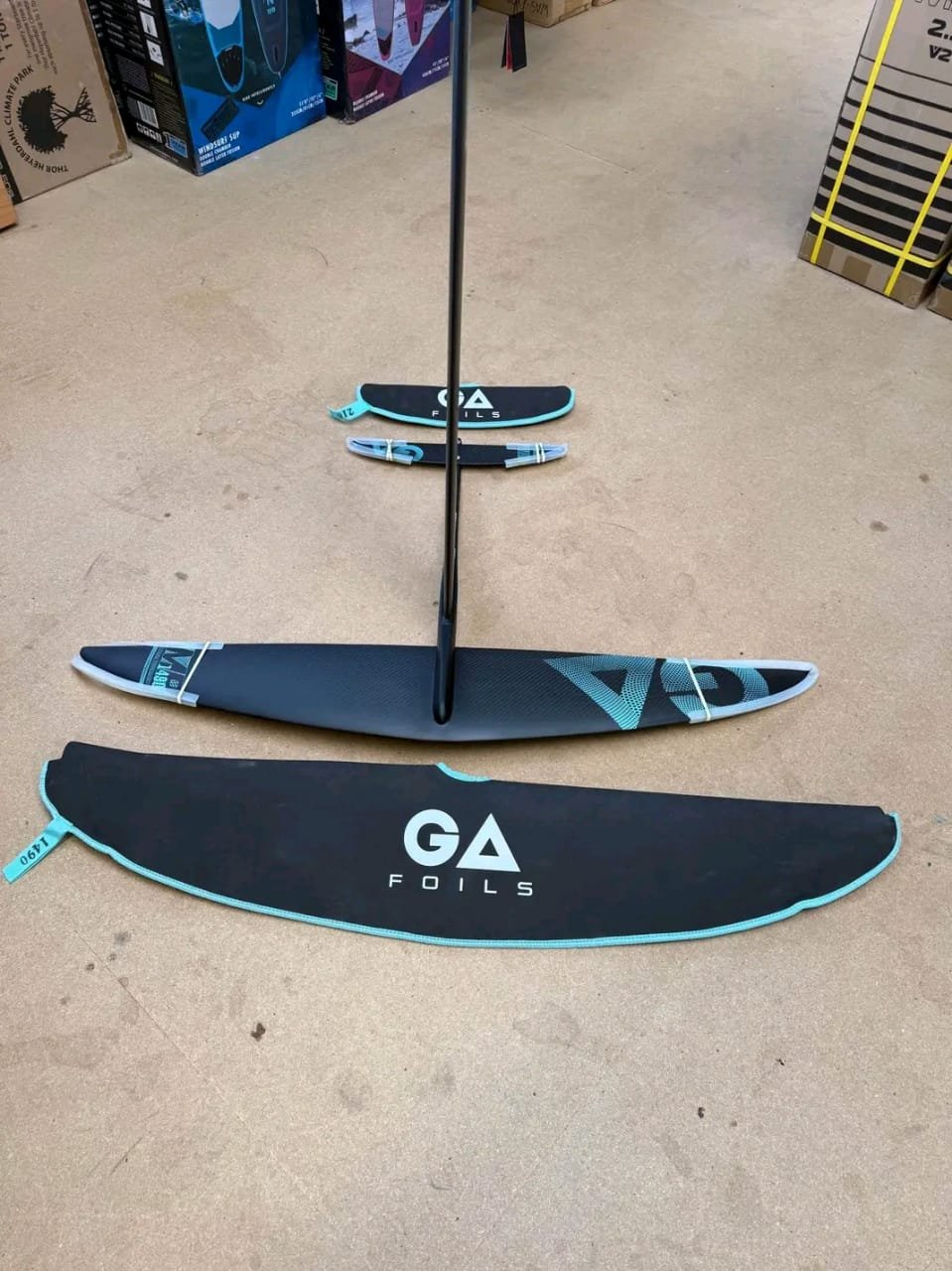
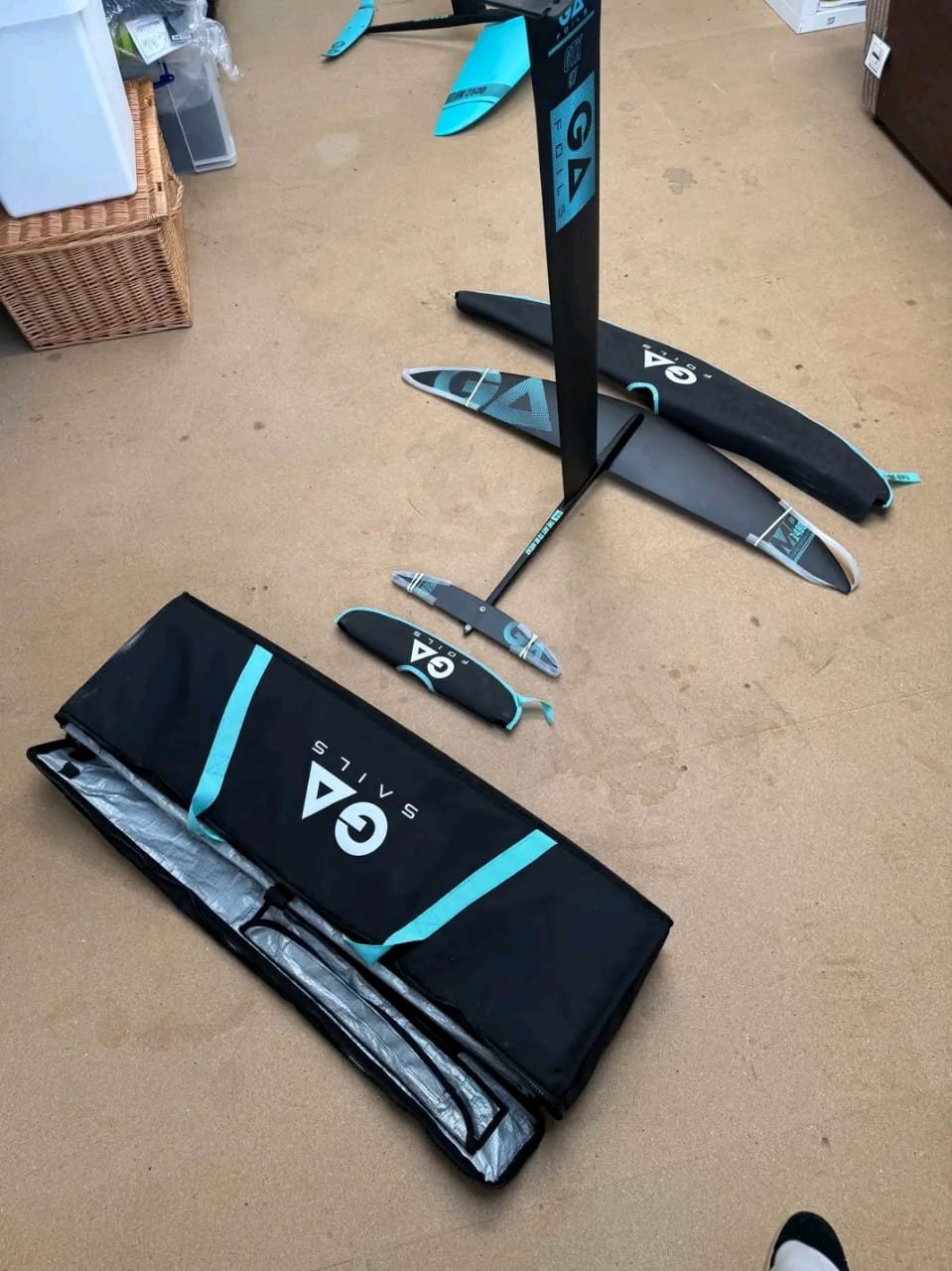

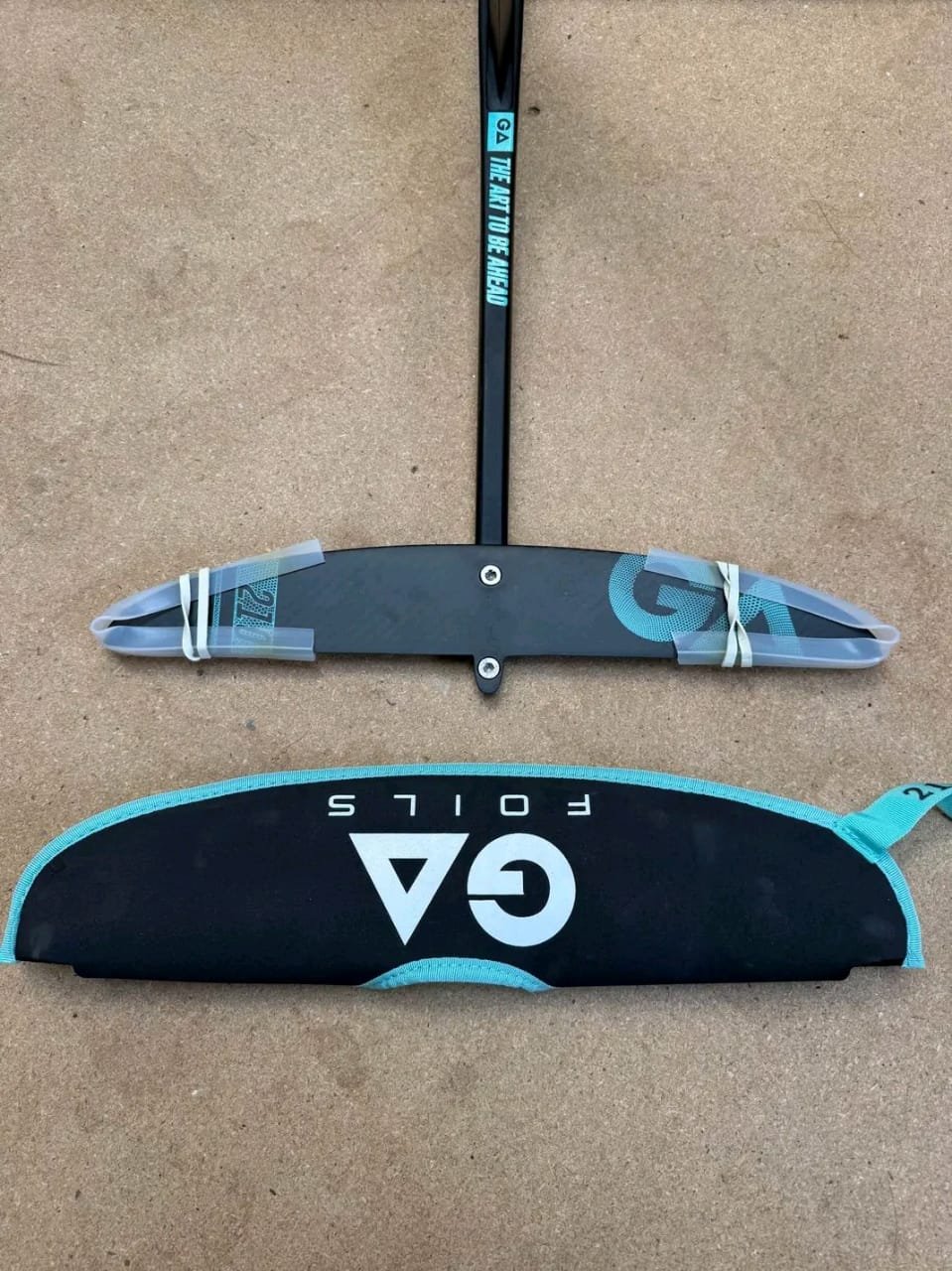
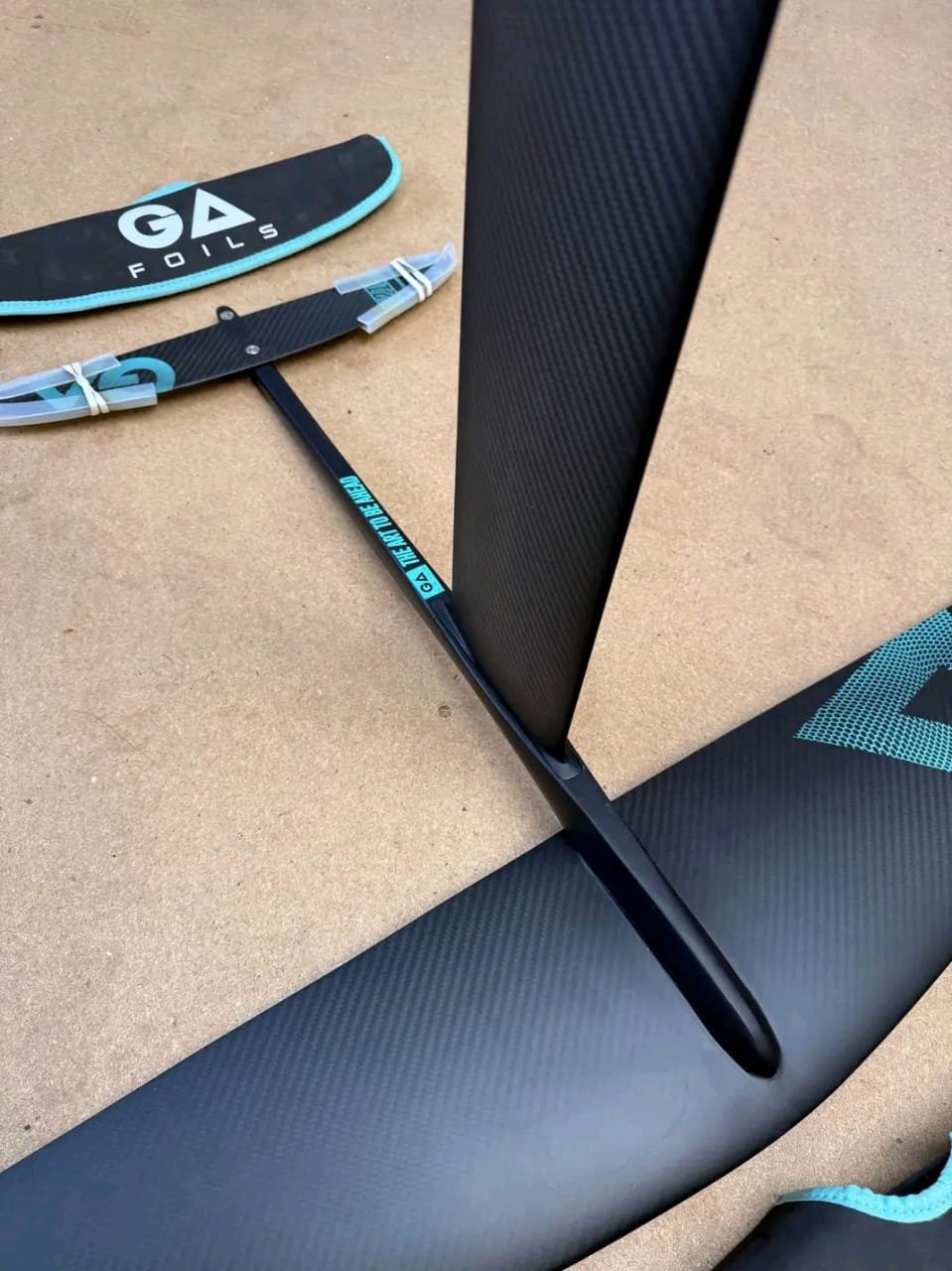
GA Carbon Foil Setup
€600.00
Description
GA Carbon Foil Setup
Precision Lift. Carbon Efficiency. Limitless Progression.
Hydrodynamic efficiency defines modern foiling. Structural stiffness determines control. Therefore, the GA Carbon Foil Setup delivers a powerful blend of lightweight performance, responsive handling, and long-term durability for riders ready to elevate every session
Unlike heavier alloy systems that introduce flex and drag, this carbon configuration maximizes energy transfer. Consequently, takeoffs feel earlier, carving feels sharper, and glide extends with noticeably reduced resistance.
Whether you ride wing foil, surf foil, or downwind, this setup adapts confidently across disciplines.
Why Choose the GA Carbon Foil Setup?
Wind and swell vary constantly. Equipment must respond instantly. Accordingly, the GA Carbon Foil Setup integrates high-modulus carbon construction to ensure torsional rigidity and hydrodynamic efficiency.
Because carbon fiber resists flex under load, rider input translates directly into foil response. Meanwhile, optimized wing profiles improve lift-to-drag ratio for smoother acceleration and extended glide.
The result? Immediate feedback, controlled power, and sustained performance.
Engineering Overview
High-Modulus Carbon Construction
Material selection defines structural integrity. GA engineered this foil system with advanced carbon layering to enhance stiffness without increasing weight.
Key advantages include:
-
Reduced torsional flex
-
Improved rail-to-rail precision

-
Enhanced pump efficiency
-
Increased high-speed stability
Since stiffness improves energy return, vertical pump cycles feel more efficient and controlled.
Hydrodynamic Wing Profiling
Front wing design determines lift characteristics. Balanced camber depth in the GA Carbon Foil Setup ensures progressive lift without excessive drag.
As speed increases:
-
Lift stabilizes smoothly
-
Cavitation risk decreases
-
Glide efficiency improves
-
Tracking remains consistent
Consequently, riders experience predictable performance across variable conditions.
On-Water Performance Characteristics
Early Takeoff & Efficient Lift
Carbon rigidity improves acceleration response. When initiating lift:
-
Pump energy transfers efficiently
-
Structural rebound enhances thrust
-
Lift engages progressively
-
Drag remains minimal
Therefore, riders achieve earlier flight with reduced effort.
Carving Precision
Torsional stiffness defines carving clarity. With minimized mast twist, foil alignment remains consistent throughout turns.
During carving:
-
Entry angles sharpen
-
Exit speed increases
-
Rail pressure distributes evenly
-
Stability improves
Because structural alignment remains stable, rider confidence grows at higher speeds.
Glide & Downwind Performance
Low drag directly enhances glide. The GA Carbon Foil Setup reduces water resistance through refined foil geometry.
As riders link bumps:
-
Glide duration extends
-
Pump cadence decreases
-
Energy conservation improves
-
Downwind efficiency increases
Consequently, long-distance sessions feel more fluid and less fatiguing.
Highlight Product Specifications
-
Construction: High-modulus carbon fiber
-
Mast: Lightweight, torsionally rigid design
-
Front Wing: Optimized lift-to-drag profile
-
Stabilizer: Balanced pitch control
-
Discipline: Wing foil / surf foil / downwind
-
Skill Level: Intermediate to advanced
Structured clarity supports informed purchasing decisions.
Who Is the GA Carbon Foil Setup Ideal For?
Different riders demand distinct performance traits. Fortunately, this setup adapts across disciplines and skill stages.
Perfect For:
-
Riders upgrading from alloy systems
-
Intermediate foilers refining carving precision
-
Downwind enthusiasts seeking glide efficiency
-
Wing foilers targeting early lift
-
Athletes prioritizing lightweight responsiveness
Inclusive design ensures riders of varied backgrounds and performance goals benefit equally.
Structural Durability & Longevity
Carbon fiber resists corrosion and fatigue under marine conditions. Reinforced junction points distribute load evenly to prevent stress concentration.
Durability advantages include:
-
Corrosion resistance
-
Reduced long-term flex degradation
-
Strong hardware interface integrity
-
Stable alignment across repeated sessions
Because consistent structural integrity supports aerodynamic efficiency, longevity remains strong.
Pump Efficiency & Energy Transfer
Vertical oscillation generates lift. However, structural flex absorbs energy. With the GA Carbon Foil Setup, rigid mast and wing alignment minimize energy loss.
As pumping begins:
-
Rebound feels responsive
-
Lift builds consistently
-
Cadence efficiency improves
-
Takeoff timing accelerates
Consequently, fewer pump cycles produce sustained glide.
Comparative Advantage Snapshot
Compared with aluminum foil systems:
-
Lighter overall weight
-
Increased torsional stiffness
-
Reduced drag
-
Improved pump efficiency
-
Enhanced carving precision
Therefore, upgrading to carbon produces measurable performance gains.
Maintenance & Care Recommendations
Carbon equipment requires thoughtful care to maintain structural integrity.
Recommended practices:
-
Rinse with fresh water after use
-
Inspect edges for impact damage
-
Tighten hardware evenly
-
Store in padded covers
-
Avoid hard-surface impacts
Because localized impact poses the greatest structural risk, transport protection remains essential.
Wind Range & Versatility
Wing selection influences lift characteristics. However, mast and wing geometry define stability envelope.
The GA Carbon Foil Setup supports:
-
Moderate to strong wind wing foiling
-
Surf foil carving
-
Downwind glide linking
-
Freeride versatility
Consequently, this system adapts across evolving rider goals.
Optimization Section
To maximize search visibility for “GA Carbon Foil Setup,” integrate the keyphrase strategically across headings, highlights, and FAQs while maintaining natural readability.
Suggested Meta Title
GA Carbon Foil Setup | Lightweight Precision & Glide Efficiency
Suggested Meta Description
Shop the GA Carbon Foil Setup for lightweight carbon stiffness, early lift, and precision carving across wing, surf, and downwind foiling.
Suggested URL
/ga-carbon-foil-setup
Clear keyword alignment enhances organic ranking potential.
FAQ Section
Is the GA Carbon Foil Setup suitable for beginners?
It suits progressing riders best. Intermediate and advanced riders maximize its performance benefits.
Does carbon improve lift efficiency?
Yes. Increased stiffness enhances energy transfer and reduces drag.
Is it durable in saltwater conditions?
Yes. Carbon resists corrosion effectively.
Can it support multiple disciplines?
Absolutely. The setup adapts across wing, surf, and downwind applications.
Conversion-Focused Closing Statement
Precision transforms progression. Lightweight stiffness enhances control. Hydrodynamic refinement extends glide.
The GA Carbon Foil Setup empowers riders to unlock efficient lift, sharper carving, and sustained performance across disciplines. Because carbon engineering meets balanced design, this system becomes a strategic upgrade for ambitious foilers.
Elevate your sessions. Refine your control. Expand your limits.
Advanced Performance Engineering of the GA Carbon Foil Setup
Hydrodynamic refinement separates average sessions from exceptional ones. Structural stiffness dictates response under load. Consequently, the GA Carbon Foil Setup delivers measurable gains in lift efficiency, carving precision, and glide extension across multiple foiling disciplines.
Unlike entry-level composite or aluminum systems that introduce torsional lag, this carbon architecture preserves alignment under stress. Therefore, rider input converts directly into forward drive and vertical lift.
Carbon Mast Dynamics & Torsional Rigidity
High-Stiffness Mast Profile
The mast functions as the structural spine of the system. GA engineered its carbon layup to resist torsional deformation while maintaining optimal flex rebound.
As speed increases:
-
Mast twist remains minimal
-
Foil angle consistency improves
-
Rail engagement sharpens
-
High-speed tracking stabilizes
Because rigidity protects foil alignment, carving precision improves noticeably.
Laminate Orientation Strategy
Carbon fibers align along stress vectors to balance vertical bending resistance with torsional control. Consequently, pumping efficiency increases while structural fatigue decreases over time.
Front Wing Lift Architecture
Balanced Camber Geometry
Front wing camber depth determines lift curve behavior. GA designed this wing to produce progressive lift without abrupt power spikes.
When accelerating:
-
Lift builds smoothly
-
Stall threshold remains predictable
-
Drag coefficient stays controlled
-
Glide efficiency improves
Since balanced lift enhances control, riders maintain composure in variable wind.
Surface Area Optimization
Wing sizing influences low-end performance. The GA Carbon Foil Setup typically integrates front wings tuned for moderate-to-strong wind versatility.
Therefore, riders benefit from:
-
Early takeoff capability
-
Efficient cruising speed
-
Stable downwind glide
-
Controlled carving arcs
Stabilizer & Pitch Control Balance
Rear stabilizer geometry influences pitch stability. GA refined stabilizer sizing to maintain predictable control across speed ranges.
As rider stance shifts:
-
Pitch remains balanced
-
Nose rise stabilizes
-
Glide maintains continuity
-
Micro-adjustments feel responsive
Consequently, long-distance runs feel less physically demanding.
Pump Efficiency & Energy Transfer
Vertical oscillation generates lift. However, structural flex absorbs energy. Because the GA Carbon Foil Setup maintains mast stiffness, pump-to-flight conversion improves.
During pump cycles:
-
Rebound feels immediate
-
Lift engages earlier
-
Cadence efficiency increases
-
Energy waste reduces
Therefore, riders sustain flight longer with fewer movements.
Carving & Rail Engagement Precision
Turning performance depends on torsional integrity. With minimized mast twist and optimized wing profile, carving transitions sharpen significantly.
During hard banking:
-
Entry angles tighten
-
Exit speed accelerates
-
Rail pressure distributes evenly
-
Stability remains composed
As a result, riders execute confident turns without hesitation.
Highlight Performance Advantages
🔹 GA Carbon Foil Setup Key Benefits
-
High-modulus carbon mast construction
-
Reduced torsional flex under load
-
Progressive lift curve for control
-
Optimized lift-to-drag ratio
-
Stable pitch management
-
Efficient pump-to-flight transition
-
Versatile multi-discipline compatibility
Clear feature presentation supports decisive purchasing behavior.
Discipline Versatility
The GA Carbon Foil Setup adapts seamlessly across foiling categories.
Wing Foiling
-
Early lift in moderate wind
-
Stable upwind tracking
-
Balanced carving dynamics
Surf Foiling
-
Predictable pump cadence
-
Controlled wave entry
-
Fluid glide transitions
Downwind Foiling
-
Extended glide efficiency
-
Reduced fatigue
-
Stable high-speed tracking
Because versatility increases equipment value, riders maximize session diversity.
Structural Durability & Long-Term Reliability
Carbon resists corrosion effectively in marine environments. Reinforced hardware interfaces reduce stress concentration.
Preventative Measures:
-
Inspect leading edges for impact damage
-
Tighten bolts evenly
-
Rinse after salt exposure
-
Store in padded covers
Since impact remains the primary risk to carbon integrity, transport protection remains essential.
Rider Weight & Performance Matching
Matching foil size to rider mass enhances efficiency.
Ideal Pairing Strategy:
-
60–75kg riders: Balanced lift for moderate wind
-
75–90kg riders: Versatile mid-range performance
-
90kg+ riders: Enhanced pumping efficiency in stronger wind
Because stiffness amplifies control regardless of rider weight, progression accelerates across skill levels.
Competitive Benchmark Comparison
Compared to alloy foil systems:
-
Significant weight reduction
-
Superior torsional stiffness
-
Improved pump efficiency
-
Reduced vibration at speed
-
Greater long-term structural stability
Therefore, upgrading to the GA Carbon Foil Setup yields measurable gains.
Reinforcement & Search Alignment
To strengthen visibility for “GA Carbon Foil Setup,” integrate the keyphrase within:
-
H2 and H3 headings
-
Product highlight lists
-
FAQ sections
-
Internal linking structures
Suggested internal links:
-
Wing Foil Boards
-
Performance Front Wings
-
Carbon Masts
-
Complete Foil Packages
Because semantic clustering improves topical authority, search ranking potential increases organically.
Expanded Section
Does carbon mast stiffness improve carving?
Yes. Reduced torsional flex enhances rail engagement precision.
Is this setup beginner-friendly?
Progressing riders benefit most, although determined beginners can grow into its performance potential.
How does it compare to aluminum systems?
Carbon offers lighter weight, improved stiffness, and reduced drag.
Is it suitable for high-speed downwind runs?
Yes. Structural stability supports composed tracking at speed.
Conversion-Focused Closing Statement
Hydrodynamic efficiency drives progression. Carbon stiffness sharpens control. Balanced engineering extends glide.
The GA Carbon Foil Setup delivers measurable lift efficiency, carving precision, and structural durability for riders committed to advancing their performance. Because lightweight carbon meets refined wing geometry, this system become
Structural Laminate Architecture of the GA Carbon Foil Setup
Material science defines performance ceilings. Fiber orientation determines stiffness behavior. Consequently, the GA Carbon Foil Setup leverages advanced laminate engineering to deliver exceptional torsional control and vertical rebound efficiency.
Multi-Axis Carbon Layering Strategy
GA engineers aligned carbon fibers along multiple stress vectors rather than relying on a single directional weave. Longitudinal fibers resist bending loads during pumping. ±45° bias layers counter torsional twist during aggressive carving. Reinforcement patches stabilize high-stress junction zones.
Because load distribution varies between pump cycles and rail engagement, this layered architecture ensures:
-
Minimal torsional lag under lateral pressure
-
Controlled vertical flex for energy rebound
-
Improved structural fatigue resistance
-
Consistent foil alignment at high speed
As a result, energy translates efficiently from rider input into hydrodynamic lift.
Mast Profile Hydrodynamics
Slim Efficiency Geometry
Mast cross-section influences drag and tracking stability. GA refined the mast profile to reduce frontal resistance while preserving stiffness density.
When velocity increases:
-
Laminar flow remains attached longer
-
Turbulence decreases along trailing edges
-
Cavitation risk lowers
-
Glide extends naturally
Since water flow stability directly affects efficiency, reduced drag enhances sustained performance.
Vibration Dampening Characteristics
Carbon fiber dampens micro-vibrations more effectively than aluminum. Consequently, high-speed tracking feels composed and predictable.
Because vibration reduction improves rider confidence, long-distance sessions feel smoother and less fatiguing.
Front Wing Aerodynamic Refinement
Lift-to-Drag Optimization
Front wing geometry balances surface area with foil thickness ratio. This configuration generates efficient lift without excessive drag.
During acceleration:
-
Lift increases progressively
-
Stall onset remains predictable
-
Glide efficiency improves
-
Control stays intuitive
Therefore, riders transition from takeoff to sustained flight seamlessly.
Carve Arc Stability
Foil outline influences turning radius. GA designed its wing planform to maintain stable edge engagement during banking.
When carving:
-
Rail pressure distributes evenly
-
Entry angles sharpen
-
Exit velocity increases
-
Flow separation minimizes
Consequently, dynamic maneuvers feel controlled and fluid.
Stabilizer Balance & Pitch Management
Rear stabilizer tuning defines pitch stability. GA calibrated stabilizer surface area to balance lift support with minimal drag.
As rider stance shifts:
-
Nose rise remains controlled
-
Pitch oscillation decreases
-
Glide continuity improves
-
Micro-adjustments feel responsive
Because pitch stability reduces corrective movements, energy efficiency increases across extended runs.
Pump Mechanics & Glide Extension
Efficient pumping depends on stiffness and rebound synergy. The GA Carbon Foil Setup maintains structural continuity between mast and wing.
During pump cycles:
-
Vertical energy transfers cleanly
-
Structural rebound enhances thrust
-
Lift engages earlier
-
Glide duration extends
As a result, riders maintain sustained flight with improved cadence efficiency.
Highlight Feature Summary
Why Upgrade to the GA Carbon Foil Setup?
-
Advanced multi-axis carbon laminate
-
Slim, low-drag mast profile
-
Progressive lift curve
-
Stable pitch management
-
Enhanced torsional rigidity
-
Efficient pump-to-flight transition
-
Multi-discipline versatility
Structured feature clarity supports confident purchasing decisions.
Downwind & Long-Distance Performance
Downwind foiling demands glide continuity and structural composure. Because drag reduction and stiffness converge in this design, the GA Carbon Foil Setup excels in linking swell bumps.
Performance advantages include:
-
Extended glide intervals
-
Reduced cadence frequency
-
Stable high-speed tracking
-
Lower cumulative fatigue
Therefore, distance riders experience measurable endurance gains.
Cross-Discipline Adaptability
Modern riders diversify across disciplines. The GA Carbon Foil Setup adapts efficiently.
Wing Foiling
-
Early lift in moderate wind
-
Controlled upwind angles
-
Predictable carving behavior
Surf Foiling
-
Responsive pump cycles
-
Clean wave entry
-
Stable rail engagement
Freeride & Open Water
-
Smooth acceleration
-
Stable cruising speed
-
Consistent control envelope
Because versatility enhances equipment value, riders maximize usage across conditions.
Durability & Structural Protection Strategy
Carbon remains resilient under marine exposure. However, impact protection remains critical.
Recommended Care Practices:
-
Inspect for edge chips after hard touchdowns
-
Use padded covers during transport
-
Rinse hardware interfaces thoroughly
-
Tighten bolts evenly to prevent stress concentration
Since structural integrity defines aerodynamic efficiency, preventative care preserves performance.
To strengthen organic ranking for “GA Carbon Foil Setup,” integrate the keyphrase naturally within:
-
H2 and H3 technical sections
-
Highlight feature lists
-
FAQ blocks
-
Internal product cluster links
Suggested cluster pages:
-
Carbon Masts
-
Performance Front Wings
-
Complete Foil Systems
-
Wing Foil Boards
Because topical authority improves search trust, visibility increases organically.
Does carbon mast stiffness improve pumping efficiency?
Yes. Reduced torsional flex enhances vertical energy transfer and rebound response.
Is this setup suitable for advanced riders?
Absolutely. High-speed stability and carving precision benefit experienced foilers significantly.
Can it handle open-water chop?
Yes. Carbon dampening reduces vibration and maintains stable tracking.
Does carbon require special maintenance?
Routine rinsing and impact protection suffice. Structural inspection ensures longevity.
Conversion-Focused Closing Statement
Precision defines progression. Carbon stiffness sharpens control. Hydrodynamic refinement extends glide.
The GA Carbon Foil Setup empowers riders to unlock measurable performance gains across wing, surf, and downwind foiling. Because advanced laminate engineering meets balanced aerodynamic design, this system becomes a transformative upgrade for committed foilers.
Long-Term Ownership Strategy: GA Carbon Foil Setup
Performance compounds with consistency. Structural integrity preserves efficiency. Therefore, maintaining your GA Carbon Foil Setup correctly ensures sustained lift, stable carving, and dependable glide across seasons.
Unlike lower-density composite systems that fatigue quickly, this carbon configuration rewards proactive care. Consequently, riders who follow structured maintenance routines retain peak responsiveness and long-term resale value.
Preventative Maintenance Framework
Post-Session Care Protocol
Saltwater exposure accelerates hardware wear. Sand intrusion compromises bolt threads. Accordingly, disciplined rinsing and inspection protect structural alignment.
After Every Session:
-
Rinse mast, fuselage, and wings thoroughly with fresh water
-
Dry all components completely before storage
-
Remove hardware periodically to prevent corrosion bonding
-
Inspect leading and trailing edges for impact marks
-
Check bolt tension evenly before next use
Because small abrasions can evolve into structural stress points, early detection prevents larger issues.
Hardware & Assembly Optimization
Precise assembly influences system rigidity. Uneven bolt torque introduces micro-flex. Therefore, correct installation ensures maximum performance.
Best Practices:
-
Tighten bolts gradually in cross-pattern sequence
-
Use manufacturer-recommended torque specifications
-
Apply marine-grade anti-seize compound sparingly
-
Inspect interface surfaces before reassembly
Since structural continuity defines torsional stiffness, assembly precision matters.
Seasonal Performance Tuning
Water density and wind conditions fluctuate throughout the year. Accordingly, adapting your GA Carbon Foil Setup enhances efficiency across seasons.
Spring Moderate Wind
-
Balanced front wing configuration
-
Stable upwind angles
-
Efficient early lift
Summer Strong Wind
-
Smaller front wing pairing
-
Increased high-speed stability
-
Reduced drag profile
Autumn Downwind Runs
-
Larger front wing option for extended glide
-
Controlled pitch stability
-
Efficient bump linking
Because versatility strengthens overall value, seasonal adjustments optimize performance envelope.
Rider Progression Pathway
Equipment should evolve with skill. The GA Carbon Foil Setup supports measurable progression across stages.
Developing Riders
-
Predictable lift curve
-
Stable pump response
-
Controlled carving initiation
Intermediate Foilers
-
Sharper rail engagement
-
Enhanced glide efficiency
-
Improved high-speed tracking
Advanced Athletes
-
Technical downwind linking
-
Tight carving arcs
-
Confident open-water stability
Consequently, this system adapts as rider ambition grows.
Long-Term Durability & Impact Awareness
Carbon resists corrosion yet requires impact vigilance. Hard surface collisions pose the greatest structural risk.
Protective Measures:
-
Transport using padded mast and wing covers
-
Avoid dragging foil components on abrasive surfaces
-
Inspect for hairline cracks after hard impacts
-
Replace damaged hardware promptly
Because structural fractures compromise hydrodynamic alignment, early intervention protects performance integrity.
Environmental Responsibility & Sustainable Investment
Carbon systems retain functionality for extended lifecycles. Purchasing and maintaining a GA Carbon Foil Setup supports sustainable equipment usage.
Benefits include:
-
Reduced material turnover
-
Lower long-term replacement frequency
-
Strong resale liquidity
-
Extended multi-discipline adaptability
Therefore, this setup represents both performance and environmental intelligence.
Resale Value & Market Positioning
High-quality carbon foil systems maintain strong secondary demand. The GA Carbon Foil Setup benefits from:
-
Brand recognition within performance segments
-
Cross-discipline versatility
-
Durable construction longevity
-
Popular size and configuration adaptability
Because versatile setups attract broader buyer pools, resale value remains stable.

Reviews
There are no reviews yet.