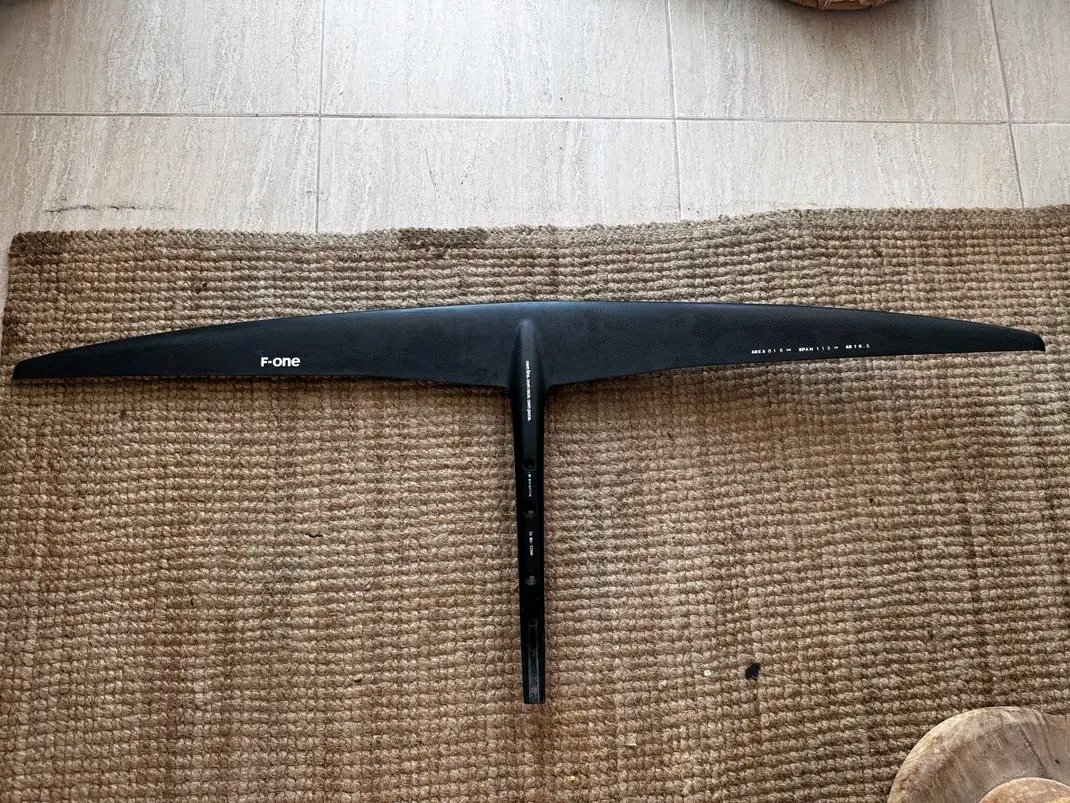
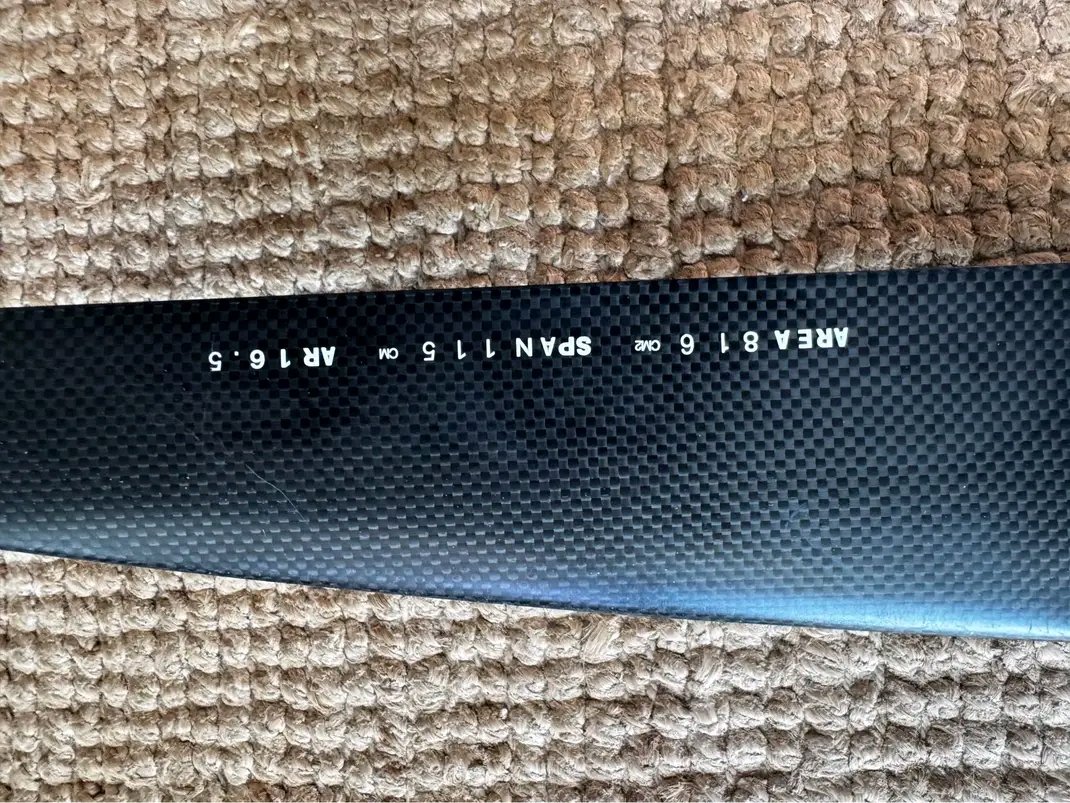


F-one Momentum 816 front wing
€250.00
Description
F-ONE Momentum 816 Front Wing – High-Aspect Precision for Speed, Glide & Control
Speed reshapes possibility. Glide sustains momentum. Precision defines progression
The F-ONE Momentum 816 front wing from F-ONE delivers elite high-aspect performance engineered for riders who chase efficiency, acceleration, and sustained glide. Designed for wing foiling and kite foiling disciplines, this front wing blends refined hydrodynamics with responsive carving control. As a result, advanced freeriders and performance-focused athletes unlock longer glides, sharper angles, and smoother transitions across variable conditions.
Because high-aspect geometry enhances lift-to-drag efficiency, the F-ONE Momentum 816 front wing maximizes forward projection without compromising stability. Consequently, you maintain speed through lulls, extend glides between pumps, and execute precise directional changes with confidence.
Why Choose the F-ONE Momentum 816 Front Wing?
High-Aspect Efficiency for Advanced Performance
Unlike mid-aspect freeride wings, the F-ONE Momentum 816 front wing prioritizes glide ratio and speed retention. Therefore, riders experience:
-
Greater projection per pump
-
Higher average cruising speeds

-
Extended glide phases
-
Enhanced upwind angles
Moreover, optimized foil sections reduce turbulence at elevated speeds. As velocity increases, control remains consistent. Instead of fighting instability, you harness momentum strategically.
Hydrodynamic Engineering of the F-ONE Momentum 816 Front Wing
Refined Profile for Maximum Lift-to-Drag Ratio
Lift generation depends on surface area and foil curvature. However, efficiency depends on drag management. The F-ONE Momentum 816 front wing integrates a carefully tuned camber profile that balances both.
Because designers optimized the foil section for laminar flow, water remains attached across the span longer. Consequently, glide extends naturally.
Additionally, tapered wing tips reduce induced drag. As pressure distributes evenly, carving feels smooth rather than abrupt.
Aspect Ratio & Span Performance
High-aspect geometry stretches span relative to chord length. Therefore, induced drag decreases significantly.
Benefits include:
-
Faster acceleration in powered wind
-
Improved pumping efficiency
-
Superior downwind glide
-
Stable high-speed tracking
Instead of relying solely on raw lift, the F-ONE Momentum 816 front wing generates sustained forward drive.
On-Water Experience with the F-ONE Momentum 816 Front Wing
Takeoff Phase
Initial lift builds progressively. As board speed increases, the wing elevates cleanly without sudden surge.
Consequently, transitions onto foil feel controlled.
Cruising Glide
Once airborne, efficiency dominates. Because drag remains low, speed sustains through minor wind fluctuations.
Furthermore, riders conserve energy during longer sessions.
Carving Dynamics
Edge control depends on torsional stability and tip design. The F-ONE Momentum 816 front wing maintains structural integrity during dynamic arcs.
As pressure builds through the turn, foil angle remains consistent. Therefore, carving feels precise and fluid.
Technical Overview
While specific setup compatibility varies, the F-ONE Momentum 816 front wing typically features:
-
816 cm² surface area
-
High-aspect performance geometry
-
Carbon composite construction
-
Optimized camber profile
-
Designed for wing and kite foiling
Because modular systems allow setup tuning, riders can adjust stabilizers and mast configurations accordingly.
Ideal Rider Profile
The F-ONE Momentum 816 front wing suits:
-
Advanced wing foilers
-
Kite foilers seeking speed efficiency
-
Downwind enthusiasts
-
Performance freeriders
-
Riders refining pumping technique
Importantly, inclusive design ensures riders of diverse builds, strengths, and skill levels benefit from efficient hydrodynamics.
Highlight Features – Product Listing Snapshot
High-aspect performance design
816 cm² optimized surface area
Extended glide efficiency
Reduced induced drag
Stable high-speed control
Carbon composite construction
Enhanced pumping projection
Precise carving response
Compatible with F-ONE modular foil systems
Designed for performance progression
Comparative Advantage
Mid-aspect wings often prioritize stability over speed. In contrast, the F-ONE Momentum 816 front wing elevates efficiency and glide.
Consequently:
-
Average session speed increases
-
Pump cadence improves
-
Downwind angles sharpen
-
Energy expenditure decreases
Upgrading becomes immediately noticeable.
Conditions Where It Excels
Moderate to Powered Wind
Higher wind amplifies efficiency gains. Riders maintain control while pushing speed thresholds.
Downwind Gliding
Extended span enhances projection between bumps.
Technical Progression
Advanced jibes and dynamic transitions benefit from consistent foil response.
Durability & Construction
Carbon layering reinforces structural stability without excess weight. Because composite engineering resists fatigue, long-term performance remains reliable.
Additionally, precision finishing reduces water adhesion. Therefore, hydrodynamic efficiency sustains across sessions.
Why the F-ONE Momentum 816 Front Wing Elevates Your Setup
Equipment shapes experience. Efficiency unlocks distance. Structure enables speed.
Because the F-ONE Momentum 816 front wing integrates high-aspect geometry, refined camber tuning, and carbon stiffness, it empowers riders to maximize every gust and carve with precision.
Instead of compensating for drag, you extend glide. Rather than losing speed through transitions, you sustain flow.
For riders committed to performance-driven foiling, the F-ONE Momentum 816 front wing delivers measurable gains in glide, control, and progression.
Advanced Performance, Materials & Buyer Guidance
F-ONE Momentum 816 Front Wing – Deep Dive into Speed, Stability & Structural Precision
Efficiency transforms sessions. Structure refines control. Momentum sustains glide.
The F-ONE Momentum 816 front wing by F-ONE builds on high-aspect hydrodynamics with race-inspired carbon engineering. Designed for riders who demand sustained projection and measurable drag reduction, this front wing converts rider input into forward velocity with remarkable consistency. Because foil geometry directly influences lift-to-drag ratio, every curve and taper on the F-ONE Momentum 816 front wing serves a clear performance objective.
Carbon Construction & Structural Integrity
High-Modulus Carbon Layup
Carbon orientation determines stiffness. Fiber alignment dictates response. Material density influences durability.
The F-ONE Momentum 816 front wing integrates multi-axis carbon layering to optimize torsional rigidity while preserving lightweight efficiency. Consequently, riders experience:
-
Immediate feedback during pumping
-
Reduced flex under load
-
Stable foil angle at speed
-
Controlled carving arcs
Moreover, reinforcement zones distribute stress across high-load areas. Therefore, structural fatigue decreases over repeated sessions.
Torsional Stability in Dynamic Riding
Carving generates lateral torque. Speed amplifies structural demand. Pumping introduces repeated compression cycles.
Because the F-ONE Momentum 816 front wing resists torsional deformation, foil alignment remains precise even during aggressive maneuvers. As a result, riders maintain edge control without unpredictable stall behavior.
Instead of absorbing energy through flex, the wing channels force into acceleration.
Hydrodynamic Optimization
High-Aspect Glide Efficiency
Aspect ratio shapes performance behavior. A longer span reduces induced drag. Narrower chord improves forward projection.
The F-ONE Momentum 816 front wing leverages these aerodynamic principles underwater. Consequently, glide phases extend significantly compared to mid-aspect alternatives.
Additionally, refined wingtip shaping reduces vortex turbulence. Therefore, water detaches cleanly at higher speeds.
Pumping Projection & Energy Transfer
Efficient pumping depends on lift stability and drag management. Because this front wing maintains laminar flow across its span, riders conserve energy during repeated pump cycles.
Furthermore, predictable lift curves allow smoother rhythm development. Over time, technique refinement accelerates.
Performance Across Disciplines
Wing Foiling
Wing riders benefit from sustained glide between gusts. As wind fluctuates, the F-ONE Momentum 816 front wing preserves forward drive.
Consequently, upwind angles improve and downwind runs extend naturally.
Kite Foiling
Speed control matters at higher tension loads. Because carbon stiffness supports structural stability, high-speed runs remain composed.
Moreover, carving transitions feel sharp rather than delayed.
Downwind & Open-Water Riding
Glide becomes essential in open-water conditions. The extended span of the F-ONE Momentum 816 front wing enhances projection across swell energy.
Therefore, linking bumps feels fluid and efficient.
Rider Profile & Skill Progression
Performance-oriented riders maximize the potential of this wing. However, progression-focused foilers also benefit from efficient lift characteristics.
Ideal for:
-
Advanced wing foilers refining glide
-
Kite foilers chasing top-end speed
-
Downwind specialists
-
Technical freeriders
-
Riders upgrading from mid-aspect setups
Inclusive design ensures riders of varied weights, strengths, and riding backgrounds experience consistent structural performance.
Highlight Feature Summary – Product Snapshot
816 cm² high-aspect performance surfac Extended glide efficiency
Reduced induced drag
High-modulus carbon construction
Enhanced pumping projection
Stable high-speed tracking
Precision carving control
Optimized wingtip turbulence reduction
Modular compatibility with F-ONE systems
Designed for progression and elite freeride
Comparative Insights
Mid-aspect freeride wings prioritize stability at lower speeds. In contrast, the F-ONE Momentum 816 front wing emphasizes glide ratio and sustained acceleration.
Consequently:
-
Average cruising speed increases
-
Energy expenditure decreases
-
Pump distance improves
-
Downwind angles sharpen
Upgrading produces noticeable efficiency gains.
Durability & Long-Term Value
Repeated load cycles challenge composite structures. Therefore, carbon layering reinforces stress-prone areas strategically.
Additionally, corrosion resistance surpasses metal alternatives. Maintenance demands decrease while structural longevity improves.
Because of this engineering, the F-ONE Momentum 816 front wing supports long-term progression without performance degradation.
Why This Wing Elevates Your Setup
Speed rewards structure. Glide rewards efficiency. Confidence rewards precision.
Because the F-ONE Momentum 816 front wing integrates advanced hydrodynamic shaping with high-modulus carbon reinforcement, it transforms how momentum carries across water.
Instead of fighting drag, you sustain projection. Rather than compensating for instability, you refine technique.
For riders committed to maximizing efficiency and carving precision, the F-ONE Momentum 816 front wing delivers measurable performance evolution.
Technical Engineering Breakdown & Performance Dynamics
F-ONE Momentum 816 Front Wing – Structural Analysis, Flow Mechanics & Load Mapping
Hydrodynamics determine glide. Geometry controls lift. Carbon structure stabilizes speed.
The F-ONE Momentum 816 front wing from F-ONE integrates high-aspect geometry with advanced composite engineering to deliver measurable lift efficiency and drag reduction. In this section, we analyze the structural logic, hydrodynamic behavior, and force distribution that define its performance profile.
Aerodynamic Principles Applied Underwater
Aspect Ratio & Induced Drag Reduction
Aspect ratio directly influences efficiency. A longer span relative to chord length reduces wingtip vortices. Because vortices generate induced drag, minimizing them increases glide ratio.
The F-ONE Momentum 816 front wing leverages this principle through extended span geometry. Consequently:
-
Forward projection increases
-
Glide phases extend
-
Pump cycles produce more distance
-
Downwind linking becomes smoother
Instead of relying on raw lift alone, the wing optimizes energy retention.
Camber Profile & Lift Curve Stability
Lift generation depends on curvature distribution across the foil section. The F-ONE Momentum 816 front wing utilizes a refined camber line that balances early lift with high-speed efficiency.
Because the lift curve builds progressively:
-
Takeoff feels controlled
-
Acceleration remains predictable
-
Stall behavior reduces
-
Transitions feel fluid
Moreover, stable lift characteristics support diverse rider weights and stances.
Carbon Construction & Structural Response
Multi-Axis Carbon Layup
Structural stiffness depends on fiber orientation. The F-ONE Momentum 816 front wing integrates carbon layers aligned longitudinally and diagonally to resist both bending and torsional forces.
Therefore:
-
Bending resistance improves under vertical load
-
Torsional rigidity stabilizes carving pressure
-
Pumping energy transfers efficiently
-
Structural fatigue reduces over time
Instead of flex absorbing rider input, the wing channels force directly into forward acceleration.
Torsional Load Control in Carving
Carving introduces lateral torque. High-aspect wings require structural reinforcement to maintain angle consistency.
Because this wing resists twist, foil alignment remains precise during aggressive arcs. Consequently:
-
Edge control sharpens
-
Rail transitions smooth out
-
High-speed turns feel stable
That predictability accelerates skill progression.
Hydrodynamic Flow Optimization
Boundary Layer Management
Water flow along the wing surface forms a boundary layer. When flow separates prematurely, drag increases.
The F-ONE Momentum 816 front wing maintains attached flow across a broad speed range. As a result:
-
Glide remains efficient
-
Speed retention improves
-
Energy loss decreases
Additionally, refined wingtip tapering minimizes vortex strength at higher velocities.
Surface Finish & Micro-Turbulence Reduction
Surface texture influences drag at micro levels. Because composite finishing remains smooth and precise, water adheres cleanly before release.
Consequently, resistance decreases incrementally. Over extended sessions, those marginal gains compound into noticeable efficiency improvements.
Load Distribution & Stress Mapping
Vertical Compression Forces
During pumping or landing transitions, vertical compression loads stress the wing root. Reinforced structural zones distribute this force evenly across the carbon framework.
Therefore:
-
Structural integrity remains consistent
-
Micro-cracking risk decreases
-
Long-term performance sustains
Lateral Torque in High-Speed Riding
Speed amplifies torque. The F-ONE Momentum 816 front wing stabilizes under lateral stress because carbon layering reinforces central load paths.
Consequently:
-
Tracking remains stable
-
Oscillation reduces
-
High-speed confidence increases
Discipline-Specific Performance Outcomes
Wing Foiling
Glide efficiency supports extended runs between gusts. Because lift remains stable, riders conserve energy during marginal wind conditions.
Additionally, carving transitions feel predictable.
Kite Foiling
Speed demands structural certainty. The F-ONE Momentum 816 front wing maintains foil angle integrity at elevated velocities.
Therefore, riders push performance boundaries safely.
Downwind Riding
Momentum becomes critical in open-water downwind conditions. High-aspect geometry enhances projection across swell lines.
Consequently, linking energy sources feels fluid and efficient.
Weight-to-Stiffness Ratio Advantage
Carbon construction achieves exceptional stiffness without excessive mass. Benefits include:
-
Faster acceleration response
-
Improved pumping cadence
-
Reduced swing inertia
-
Sharper directional changes
Instead of increasing weight for durability, the design optimizes fiber efficiency.
Why This Engineering Matters
Foil performance relies on three core variables: lift efficiency, drag control, and structural integrity.
Because the F-ONE Momentum 816 front wing integrates advanced hydrodynamics with reinforced carbon architecture, it delivers:
-
Sustained glide ratio
-
Predictable lift curves
-
Reduced induced drag
-
Stable torsional behavior
-
Long-term durability
Buyer’s Guide, Setup Optimization & Conversion Strategy
F-ONE Momentum 816 Front Wing – Setup Tuning, Rider Matching & Performance Positioning
Choice shapes outcome. Setup refines performance. Precision accelerates mastery.
The F-ONE Momentum 816 front wing from F-ONE performs at its highest level when paired correctly with mast length, stabilizer size, and fuselage configuration. While high-aspect efficiency defines its DNA, intelligent setup selection unlocks its full glide potential.
This section guides riders through optimization, compatibility logic, and buying decisions to ensure maximum return on investment.
Choosing the Right Mast Pairing
Mast Length Considerations
Mast height directly influences control and clearance.
Recommended pairings for the F-ONE Momentum 816 front wing:
-
75–80 cm mast → Balanced freeride and moderate chop
-
85 cm mast → Powered conditions and advanced carving
-
90+ cm mast → Open water, downwind, high-speed control
Because high-aspect wings project efficiently, slightly longer masts often enhance overall stability at speed. However, moderate lengths increase maneuverability for tighter transitions.
Stabilizer & Fuselage Compatibility
Stabilizer Size Impact
Rear stabilizer selection adjusts pitch control and turning behavior.
-
Smaller stabilizer → Increased speed & looseness
-
Medium stabilizer → Balanced glide & carving stability
-
Larger stabilizer → Added pitch control for progression
For advanced riders seeking glide dominance, a medium-to-small stabilizer complements the F-ONE Momentum 816 front wing efficiently.
Fuselage Length Influence
Shorter fuselage setups increase maneuverability. Longer fuselage setups enhance directional stability.
Because the F-ONE Momentum 816 front wing emphasizes glide and projection, pairing with a balanced fuselage preserves both carving agility and tracking precision.
Skill-Level Buyer Guidance
Advanced Riders
High-aspect geometry rewards technical control. Riders comfortable with pumping rhythm and speed management will maximize its glide ratio.
Progressing Riders
While advanced performance remains the focus, riders moving up from mid-aspect wings can benefit from improved efficiency. However, controlled technique development enhances overall experience.
Rider Weight Considerations
Because surface area measures 816 cm², lighter riders may achieve earlier lift. Heavier riders may require slightly stronger wind or optimized stabilizer pairing.
Inclusive performance design ensures adaptability across body types and riding backgrounds.
Wind Range & Conditions Strategy
Light-to-Moderate Wind
Efficiency becomes essential. The F-ONE Momentum 816 front wing sustains glide between gusts, allowing riders to maintain flight with fewer pump cycles.
Powered Wind
At higher speeds, structural stiffness maintains tracking alignment. Consequently, riders push top-end velocity with confidence.
Downwind Conditions
Projection between swell energy becomes fluid due to extended span efficiency.
Comparative Positioning Within the F-ONE Range
The Momentum 816 front wing occupies a high-performance efficiency segment.
Compared to mid-aspect freeride wings:
-
Glide ratio increases
-
Speed ceiling rises
-
Pump distance improves
-
Carving requires more precision
Compared to extreme race wings:
-
Control remains accessible
-
Stability improves in mixed conditions
-
Versatility expands
Therefore, the F-ONE Momentum 816 front wing balances elite efficiency with practical usability.
Performance Benefits at a Glance
High-aspect 816 cm² surface for extended glide
Reduced induced drag for higher average speed
Carbon composite stiffness for torsional stability
Efficient pumping projection
Stable carving arcs
Modular compatibility within F-ONE foil systems
Optimized wingtip tapering for vortex control
Designed for wing and kite foiling
Ideal for advanced freeride & downwind
Long-term structural durability
Long-Term Value & Investment Logic
Performance equipment should support progression over multiple seasons.
Because carbon construction resists fatigue and corrosion, the F-ONE Momentum 816 front wing maintains structural consistency over time. Additionally, its modular compatibility allows riders to adjust stabilizers and mast configurations without replacing the front wing entirely.
Instead of upgrading repeatedly, riders refine setup intelligently.
Conversion Summary – Why Choose the F-ONE Momentum 816 Front Wing
Momentum builds efficiency. Glide extends possibility. Structure enables confidence.
The F-ONE Momentum 816 front wing integrates hydrodynamic refinement, high-aspect geometry, and carbon stiffness into a performance-driven package that elevates wing and kite foiling alike.
Instead of sacrificing control for speed, you gain both. Rather than limiting progression, you expand capability.
For riders committed to maximizing glide, carving precision, and sustained projection, this front wing represents a performance-forward investment.



Reviews
There are no reviews yet.