
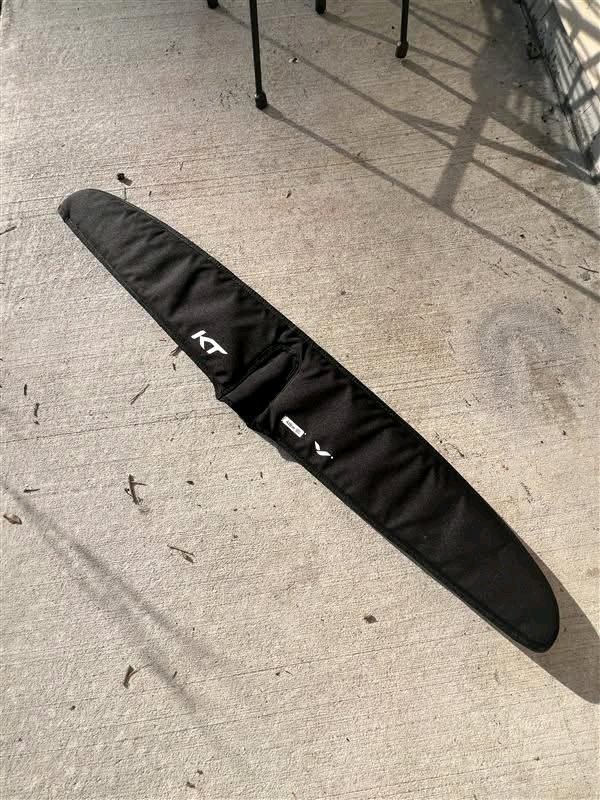
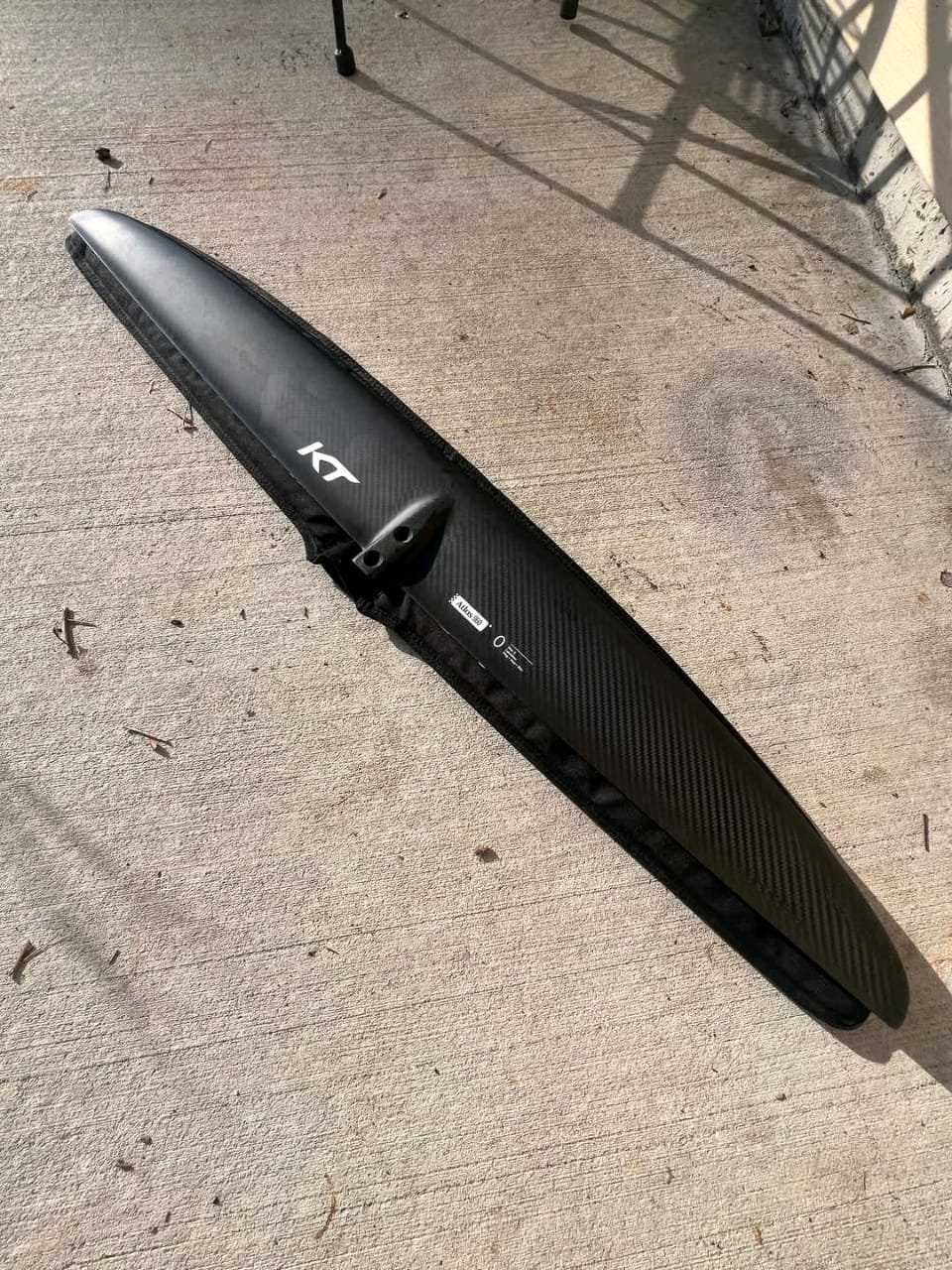

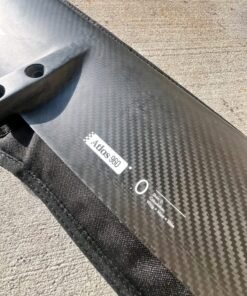

KT Atlas 960 Front Wing
Precision Lift Meets Progressive Control
Momentum transforms when hydrodynamics align with intention. The KT Atlas 960 Front Wing delivers that alignment through refined foil geometry, balanced surface area, and precision carbon construction. Designed for riders who demand efficient lift without sacrificing agility, this front wing bridges stability and speed in one cohesive performance platform.
Performance evolves with confidence. Therefore, the KT Atlas 960 Front Wing prioritizes smooth takeoffs, predictable pitch control, and dynamic carving response. Instead of overwhelming lift spikes, riders experience progressive elevation that feels intuitive underfoot.
Versatility defines its DNA. Because conditions shift and disciplines overlap, this 960 cm² wing adapts seamlessly to wing foiling, surf foiling, and light downwind exploration
Why Choose the KT Atlas 960 Front Wing?
Equipment influences every second on the water. For that reason, selecting the right front wing determines how quickly you progress and how confidently you ride.
Unlike oversized beginner wings that sacrifice responsiveness, the KT Atlas 960 Front Wing balances early lift with glide efficiency. Consequently, riders maintain speed without constant pumping. Meanwhile, its refined aspect ratio encourages tighter turns and improved flow through carving transitions.
Control inspires progression. As a result, sessions become longer, smoother, and more productive.
Hydrodynamic Design Overview
Optimized 960 cm² Surface Area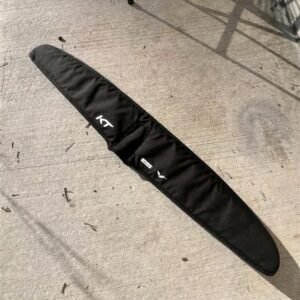
Surface area impacts lift threshold and glide characteristics. At 960 cm², this wing occupies the performance sweet spot between high-lift stability and mid-aspect agility.
Because lift builds gradually, takeoffs feel controlled rather than abrupt. Additionally, the balanced span improves rail-to-rail response during carving.
Refined Leading Edge Profile
A carefully tuned leading edge reduces drag during acceleration. Consequently, riders gain speed efficiently without sacrificing low-speed control.
Water flows cleanly across the wing surface. Therefore, turbulence decreases, and glide extends naturally.
Mid-Aspect Geometry
Aspect ratio influences turning behavior and speed potential. In this configuration, mid-aspect geometry blends maneuverability with efficient forward drive.
Riders experience:
-
Smooth carving arcs
-
Stable pitch control
-
Reduced induced drag
-
Enhanced pump return energy
Performance Benefits of the KT Atlas 960 Front Wing
Early Yet Controlled Lift
Lift initiates smoothly at moderate board speeds. As a result, takeoffs feel predictable and confidence-building.
Instead of fighting sudden elevation, riders guide ascent with subtle weight shifts.
Efficient Glide Between Inputs
Energy conservation matters. Therefore, the KT Atlas 960 Front Wing maximizes lift-to-drag efficiency.
Momentum carries naturally between gusts or wave sections. Consequently, fewer pumps sustain flight.
Responsive Carving
Turning defines advanced foiling. Because roll initiation remains precise, carving transitions feel fluid rather than delayed.
Rail engagement strengthens connection between rider and foil. Meanwhile, pitch stability prevents over-foiling during aggressive arcs.
Built for Multiple Foiling Disciplines
Adaptability increases long-term value. For that reason, the KT Atlas 960 Front Wing supports diverse riding styles.
Wing Foiling Performance
Wind-generated power requires lift stability. In powered conditions, this wing maintains composure without breaching unexpectedly.
Moreover, upwind tracking feels controlled due to balanced lift distribution.
Surf Foiling Application
Wave energy rewards glide efficiency. Consequently, riders connect multiple sections without exhausting pump cycles.
Smooth stall characteristics also improve recovery after touchdowns.
Light Downwind Exploration
Long glides demand hydrodynamic refinement. Because induced drag remains minimized, the wing sustains forward drive across rolling swell.
Technical Specifications – KT Atlas 960 Front Wing
Front Wing Area
-
960 cm² optimized platform
Construction
-
High-modulus carbon composite
-
Reinforced structural core
-
Precision-machined mounting interface
Performance Profile
-
Mid-aspect design
-
Balanced camber distribution
-
Efficient lift-to-drag ratio
Each element contributes to predictable performance and long-term durability.
Who Is the KT Atlas 960 Front Wing Designed For?
Progression-focused riders benefit most from balanced lift characteristics. Intermediate foilers gain stability without sacrificing maneuverability. Advanced riders appreciate glide efficiency and carving precision.
Inclusivity remains central to its design philosophy. Regardless of body type, strength, or experience background, this wing adapts to diverse riding approaches.
Because control enhances confidence, riders of varying skill levels unlock smoother sessions.
KT Atlas 960 Front Wing
Advanced Hydrodynamic Engineering Explained
Hydrodynamic refinement separates average foils from exceptional ones. The KT Atlas 960 Front Wing integrates performance geometry that maximizes laminar flow while minimizing induced drag. Every contour influences how water travels across the surface. Consequently, efficiency increases at both low and mid-range speeds.
Precision shaping enhances responsiveness. Therefore, riders experience smooth lift engagement rather than abrupt elevation spikes. As board speed builds, water remains attached to the foil surface longer. As a result, stall resistance improves and recovery becomes more forgiving.
Design decisions focus on usable performance rather than theoretical speed numbers. Because real-world conditions vary, adaptability remains essential.
Lift Curve & Speed Envelope Analysis
Lift generation determines takeoff threshold and glide sustainability. At 960 cm², this wing hits a refined balance between supportive surface area and speed efficiency.
Low-Speed Lift Behavior
Early engagement helps riders rise onto foil without excessive pumping. Therefore, moderate board speed activates stable lift.
Instead of sudden vertical pull, the wing delivers progressive elevation. Consequently, beginners transitioning to mid-performance gear feel comfortable, while advanced riders maintain control.
Mid-Range Speed Efficiency
Acceleration feels fluid once fully engaged. Because the aspect ratio reduces drag, the KT Atlas 960 Front Wing sustains forward glide with minimal energy loss.
Momentum carries naturally between power inputs. As a result, sessions become longer and less fatiguing.
High-Speed Stability
Speed stability depends on pitch balance. In powered conditions, this wing resists over-lifting. Meanwhile, controlled camber distribution prevents unwanted breaching.
Riders maintain composure even as velocity increases.
Rider Weight Optimization Guide
Different rider profiles influence lift dynamics. For that reason, understanding weight-to-surface-area interaction improves performance outcomes.
Lightweight Riders (Under 70 kg)
Lower body mass enhances early lift. Consequently, the wing feels lively and responsive.
Carving transitions become sharper. Additionally, pump efficiency increases due to reduced load demand.
Mid-Weight Riders (70–90 kg)
Balanced performance defines this range. Lift activates predictably without requiring aggressive board speed.
Glide remains efficient, and carving stability supports progression.
Heavier Riders (90 kg+)
Increased rider mass benefits from supportive lift area. The 960 cm² platform provides adequate surface without feeling oversized.
Because pitch remains controlled, takeoffs feel stable rather than overpowering.
Pumping Efficiency & Energy Return
Linking waves or sustaining glide requires effective energy transfer. The KT Atlas 960 Front Wing enhances forward drive through tuned flex characteristics.
Each compression during a pump sequence produces measurable propulsion. Therefore, riders conserve energy while maintaining flight.
Extended sessions become achievable. Moreover, rhythm develops naturally due to predictable lift response.
Carving Dynamics & Rail Control
Turning defines the progression stage of foiling. In this context, the wing’s mid-aspect geometry enables precise roll initiation.
Transitions from heel-side to toe-side feel connected. Additionally, stabilized pitch control prevents sudden altitude spikes mid-carve.
Flow becomes continuous rather than segmented.
Tuning & Setup Considerations
Fine adjustments elevate performance potential. Therefore, riders should consider the following optimization strategies:
Mast Placement
Moving the mast forward increases front-foot pressure and earlier lift. Conversely, shifting rearward enhances looseness and speed.
Small adjustments create noticeable changes. Consequently, gradual experimentation yields optimal results.
Stabilizer Pairing
Rear wing configuration influences pitch sensitivity. Pairing the KT Atlas 960 Front Wing with a slightly smaller stabilizer increases agility. Meanwhile, larger stabilizers enhance stability.
Customization supports personal riding style.
Competitive Positioning: Why the KT Atlas 960 Front Wing Excels
Choosing a front wing often involves comparing surface area, aspect ratio, and brand reputation. However, performance depends on real-world balance.
Compared to Larger Lift-Focused Wings (1100–1300 cm²)
-
Greater speed potential
-
Reduced drag
-
Tighter carving radius
-
Less overpowering lift in strong wind
Compared to Smaller High-Aspect Wings (800–900 cm²)
-
Earlier takeoff
-
Improved low-speed stability
-
Better pump support
-
More forgiving stall characteristics
Because it occupies the middle performance spectrum, the KT Atlas 960 Front Wing supports progression without limiting growth.
Long-Tail SEO Integration Section
Riders searching for the following phrases often seek a balanced performance solution:
-
Best 960 cm² front wing for wing foiling
-
Mid-aspect carbon hydrofoil wing
-
Versatile surf and wing front foil
-
Efficient pump wing for intermediate riders
-
High-performance front wing with early lift
The KT Atlas 960 Front Wing addresses these needs through optimized geometry, carbon construction, and adaptable lift characteristics.
Search intent aligns with real-world performance. Consequently, this wing provides practical benefits rather than theoretical claims.
Durability & Construction Confidence
Carbon integrity influences longevity. High-modulus layering resists torsional flex under aggressive carving.
Reinforced mounting interfaces ensure secure mast connection. Therefore, riders experience minimal vibration at speed.
Saltwater exposure demands corrosion awareness. Proper care maintains structural consistency season after season.
Ownership Advantages
Investing in the KT Atlas 960 Front Wing delivers measurable returns:
-
Faster progression
-
Reduced fatigue
-
Greater discipline versatility
-
Lower long-term replacement frequency
-
Consistent resale value
Because balanced performance extends usability, this wing supports riders beyond short-term trends.
KT Atlas 960 Front Wing
Precision Geometry That Drives Real Performance
Foil geometry determines how a wing feels under pressure. The KT Atlas 960 Front Wing integrates refined span distribution, carefully tuned camber, and controlled thickness ratios to produce efficient lift across a wide speed range.
Water accelerates over the upper surface while maintaining attachment longer along the chord line. Consequently, stall resistance improves during low-speed maneuvers. Instead of abrupt lift drop-offs, riders experience gradual recovery.
Span length influences roll stability. Therefore, the 960 platform balances carving freedom with pitch control. Each turn feels supported rather than twitchy.
Performance begins beneath the surface.
Chord Distribution & Camber Engineering
Chord length affects lift curve smoothness. In this design, moderate chord depth stabilizes early takeoff behavior. As a result, the wing engages progressively rather than aggressively.
Camber positioning enhances forward drive. Because the lift-to-drag ratio remains optimized, glide continues efficiently between energy inputs.
Riders feel less resistance. Meanwhile, board speed builds naturally.
Thickness Profile & Stall Characteristics
Thickness ratio impacts both lift power and drag. The KT Atlas 960 Front Wing uses a balanced thickness distribution that supports structural strength without unnecessary drag.
Low-speed stability improves significantly. Additionally, recovery after partial ventilation feels controlled.
Forgiveness accelerates progression.
Sustainability & Long-Term Value
Durability supports environmental responsibility. Because high-modulus carbon resists fatigue, riders replace equipment less frequently.
Extended lifespan reduces material waste. Consequently, long-term ownership aligns with mindful consumption.
Rinsing gear after sessions preserves structural integrity. Simple maintenance habits extend performance consistency for years.
Responsibility and performance coexist.
Care & Maintenance Guide
Proper care protects investment. Therefore, follow these best practices:
After Every Session
-
Rinse thoroughly with fresh water
-
Dry mounting hardware completely
-
Inspect leading edge for minor impacts
Monthly Performance Check
-
Re-tighten bolts to manufacturer torque specs
-
Inspect mast interface alignment
-
Check surface integrity for chips or cracks
Consistent inspection ensures safe, reliable riding.
Advanced FAQ – Optimized for Organic Search
Is the KT Atlas 960 Front Wing good for progression riders?
Yes. Balanced lift and controlled pitch stability help intermediate riders advance confidently while still satisfying experienced foilers.
What conditions suit the KT Atlas 960 Front Wing best?
Moderate wind, clean surf, and mixed water conditions all complement its balanced performance profile.
Does the 960 cm² size provide early lift?
Absolutely. The surface area supports smooth takeoffs without overwhelming speed.
Can heavier riders use this wing effectively?
Yes. The 960 platform accommodates various rider weights while maintaining agility.
How does it compare to a 1000 cm² front wing?
A 960 cm² wing delivers slightly more speed and maneuverability while preserving supportive lift characteristics.
Emotional Connection to Performance
Confidence transforms how riders approach the water. Knowing your front wing responds predictably eliminates hesitation.
Instead of adjusting constantly for instability, you focus on flow. Because the KT Atlas 960 Front Wing integrates lift efficiency and carving precision, mental bandwidth shifts toward creativity.
Momentum builds. Skills sharpen. Sessions feel purposeful.
Equipment influences mindset more than most riders realize.
Buying Decision Reinforcement
Choosing the right front wing requires evaluating:
-
Lift threshold
-
Glide efficiency
-
Turning dynamics
-
Structural durability
-
Long-term progression potential
The KT Atlas 960 Front Wing delivers across each category.
Balanced engineering ensures it remains relevant beyond early progression stages. Versatility across disciplines extends usability.
Value compounds over time.
KT Atlas 960 Front Wing
Real-World Performance in Dynamic Conditions
Conditions rarely stay consistent. Wind shifts. Swell builds. Water texture changes. The KT Atlas 960 Front Wing adapts to those transitions with balanced lift generation and composed pitch stability.
Acceleration begins smoothly. Consequently, takeoff timing feels intuitive rather than forced. As speed increases, glide stabilizes and forward drive becomes efficient. Instead of constantly correcting altitude, riders maintain controlled elevation with subtle adjustments.
Performance remains predictable even when water surface becomes chaotic.
Speed-to-Lift Transition Dynamics
Lift engagement defines the first critical moment of any session. Because the KT Atlas 960 Front Wing distributes camber progressively across the chord, board speed converts into upward lift gradually.
Early acceleration triggers stable elevation. Meanwhile, drag stays controlled. Therefore, riders avoid abrupt over-foiling.
As velocity climbs into mid-range, the wing enters its optimal efficiency window. Glide extends naturally. Consequently, pumping becomes rhythmic rather than aggressive.
At higher speeds, pitch balance prevents sudden climb spikes. Control remains consistent across the full speed envelope.
Advanced Carving Mechanics
Turning performance separates intermediate equipment from refined designs. In carving scenarios, the KT Atlas 960 Front Wing maintains roll precision while preserving lift integrity.
Rail Initiation
Lean begins subtly. Water pressure shifts evenly across the span. As a result, roll engages smoothly without delay.
Mid-Carve Stability
Centrifugal force increases during tight arcs. However, balanced thickness distribution sustains lift across the inside wing surface. Consequently, altitude remains stable.
Exit Acceleration
Carve completion transitions seamlessly into forward drive. Because induced drag remains minimized, acceleration out of turns feels immediate.
Fluid motion replaces segmented movement.
Pump Cadence & Efficiency Under Fatigue
Extended sessions test endurance. Efficient foils reduce unnecessary effort.
The KT Atlas 960 Front Wing returns measurable propulsion during each compression cycle. Therefore, riders sustain glide longer with fewer high-intensity pumps.
Under fatigue conditions, predictable lift response maintains composure. Additionally, smooth stall recovery prevents sudden altitude loss.
Energy management improves session longevity.
Recommended Setup Pairings
Optimized performance depends on compatible components. Therefore, consider the following pairing strategies:
Stabilizer Pairing
-
Smaller stabilizer: Increases looseness and carving agility
-
Medium stabilizer: Enhances balanced control
-
Larger stabilizer: Boosts pitch stability for learning progression
Mast Length Considerations
-
Short mast: Encourages early-stage control and shallow water use
-
Mid-length mast: Offers versatile all-around balance
-
Longer mast: Maximizes clearance in steeper surf conditions
Board Volume Compatibility
Mid-volume boards complement the 960 cm² profile. Consequently, takeoff timing remains predictable without excessive front-foot pressure.
Balanced setups amplify wing performance.
Modular Ecosystem & Future Growth
Progression rarely stops at one configuration. Because riding styles evolve, modular compatibility extends value.
Interchangeable front wings within similar mounting systems allow experimentation with higher aspect ratios or larger lift platforms. Therefore, the KT Atlas 960 Front Wing serves as a foundation within a broader performance range.
Instead of replacing entire systems, riders refine individual components.
Long-term adaptability protects investment.
Discipline-Specific Application Deep Dive
Wing Foiling in Variable Wind
Gusts introduce lift variability. However, progressive camber distribution stabilizes altitude during sudden wind spikes.
Controlled pitch improves upwind tracking. Consequently, riders conserve energy during long reaches.
Surf Foiling in Clean Swell
Wave faces require carving precision. Because roll response remains intuitive, riders maintain tight arcs without losing lift mid-turn.
Glide efficiency supports linking multiple wave sections.
Light Downwind Sessions
Rolling swell demands sustained glide. Reduced induced drag enhances momentum carry.
As a result, transitions between bumps feel smoother and less forced.
Safety Through Predictability
Stability enhances safety. Progressive stall characteristics reduce unexpected drop-offs.
During touchdowns, water reattachment occurs smoothly. Therefore, riders regain foil engagement quickly.
Consistent lift response decreases panic corrections. Focus remains on flow rather than recovery.
Confidence builds security.
Ownership Value Proposition
Investing in the KT Atlas 960 Front Wing delivers measurable advantages:
-
Reduced learning frustration
-
Faster technical progression
-
Lower fatigue during long sessions
-
Adaptability across disciplines
-
Durable carbon lifespan
Balanced engineering translates into real-world return on investment.
Be the first to review “KT Atlas 960 Front Wing”
Related products


Second Hand

Second Hand

Second Hand
Second Hand

Second Hand
Second Hand
Second Hand
Second Hand
Reviews
There are no reviews yet.